
The alarm goes off. Half the team looks around waiting for someone else to act. One person heads back to their desk to grab their bag. Nobody is sure which exit to use. This is not a failure of fire safety equipment – it is a failure of training, and it plays out in workplaces across Ireland every time an alarm sounds and the people in the building have never been shown what to do. SafeHands Health & Safety Solutions delivers onsite fire safety training that changes this, for teams of up to 12, at your premises.
Table of Contents
- Introduction to Fire Safety Training
- Essential Fire Safety Knowledge
- Fire Safety Equipment Training
- Evacuation Procedures
- Creating Fire Awareness
- Compliance and Certification
- Frequently Asked Questions
1. Introduction to Fire Safety Training
Fire is one of the most serious threats any workplace faces, and awareness of it in many Irish organisations extends no further than following exit signs. SafeHands delivers onsite Fire Safety Training for workplaces throughout Ireland – giving every employee the knowledge and confidence to respond correctly when it matters.
i. Importance in Irish Workplaces
A workforce that understands fire risks responds better when fire occurs. Trained employees who can prevent incidents, recognise hazards, and act correctly are an asset no amount of signage replaces. SafeHands delivers all fire safety training onsite, ensuring instruction is grounded in the environment and equipment employees will encounter in an actual emergency.
ii. Legal Requirements
Irish employers must prepare emergency plans, maintain evacuation procedures, and ensure employees know how to respond to fire – requirements under the Safety, Health and Welfare at Work Act 2005 and the Fire Services Acts. Alarms and signage alone do not satisfy these obligations. People must understand what the systems mean and what to do when they activate.
2. Essential Fire Safety Knowledge
Before employees can respond effectively to a fire emergency, they need to understand how fires start, how they develop, and what conditions allow them to spread. This foundational knowledge informs every other aspect of fire safety training – from hazard identification to equipment selection to evacuation decision-making.
i. Fire Prevention
Understanding how fires start is the foundation of preventing them. Training covers common fire hazards in workplace environments – overloaded electrical sockets, poor storage of flammable materials, blocked ventilation, and inadequate housekeeping practices among them. Employees who understand these hazards are far more likely to notice and report them before they develop into incidents. Good housekeeping, safe storage and handling of flammable substances, and regular maintenance of electrical equipment are reinforced as practical habits rather than abstract instructions.
ii. Detection Systems
Employees learn how fire detection systems work, what different alarm signals mean, and what the appropriate response is in each case. This includes understanding the difference between an alarm test and a genuine activation, the location of manual call points, and the critical importance of never ignoring an alarm or assuming it is a false activation until confirmed otherwise. Familiarity with detection systems reduces hesitation and produces faster, more orderly evacuations when a real emergency occurs.
iii. Emergency Procedures
Training covers the full sequence of actions required when a fire is discovered or an alarm sounds – activating the alarm, alerting colleagues, following the evacuation route, and reporting to the assembly point. Employees learn the importance of closing fire doors when evacuating, not using lifts, and not returning to the building until instructed to do so by the appropriate authority. Clear, practised procedures produce calmer, more coordinated evacuations even under the stress of a real incident.
3. Fire Safety Equipment Training
Equipment is only useful when the person holding it understands what it does, what it cannot do, and when using it would make things worse. Training covers each type in practical terms – applications, limitations, and the conditions under which putting it down and evacuating is the right call.
i. Fire Extinguishers
Not all fires are the same, and not all extinguishers are appropriate for all fire types. Training covers the classes of fire – A (solid materials), B (flammable liquids), C (flammable gases), D (metals), F (cooking oils and fats), and electrical fires – and explains which extinguisher type is suited to each. Participants learn the PASS technique: Pull the pin, Aim at the base of the fire, Squeeze the handle, and Sweep from side to side. This practical instruction gives employees the confidence to respond correctly in the early stages of a fire, when swift, accurate action can still be effective.
ii. Fire Blankets
Fire blankets are particularly relevant in kitchen and laboratory environments where small, contained fires involving cooking oils or flammable materials may occur. Employees learn how and when to deploy a fire blanket safely, including the correct approach to protect hands and face during deployment and the importance of leaving a blanket in place once used rather than lifting it to check. Understanding the limitations of fire blankets – and knowing when to step back and evacuate – is as important as knowing how to use them.
iii. Emergency Equipment
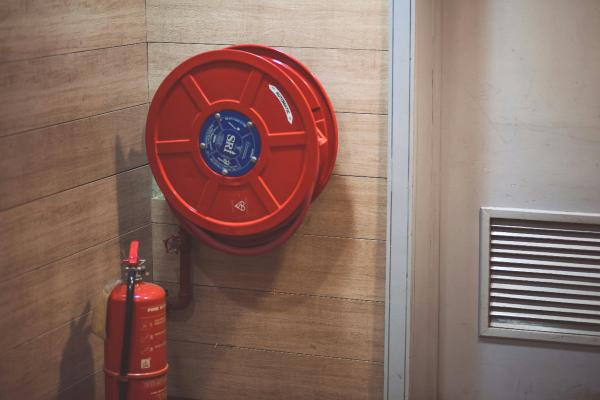
In addition to extinguishers and fire blankets, workplaces may be equipped with hose reels, emergency lighting systems, and self-closing fire doors. Training familiarises employees with this equipment, how it functions, and the role it plays in containing fire and supporting safe evacuation. Employees who understand the purpose of fire doors are less likely to prop them open – a common practice with significant safety implications that trained staff are far better positioned to challenge and correct.
4. Evacuation Procedures
Knowing that a fire exit exists is not the same as being ready to use it under pressure. Effective evacuation training bridges the gap between written procedures and real-world readiness, giving employees the familiarity and confidence they need to act correctly when an alarm sounds.
i. Exit Routes
Training familiarises employees with the specific exit routes available in their workplace, the importance of keeping them clear at all times, and what to do if a primary route is blocked. This practical familiarity is particularly important for employees who work in areas with complex layouts, in multi-floor buildings, or during out-of-hours periods when normal staffing and route availability may differ. Knowing the alternatives before you need them is the difference between a swift evacuation and a dangerous one.
ii. Assembly Points
Every employee should know the location of their designated assembly point and understand the importance of going directly there without delay. Training explains why assembly point discipline matters – accounting for all personnel requires everyone to be where they are expected. Participants also learn what to do if they are unable to reach the assembly point due to the position of a fire, and how to communicate their location to emergency services or building management.
iii. Roll Call Procedures
Accounting for all building occupants after an evacuation is a critical life-safety task that requires coordination and accuracy under pressure. Training covers how roll calls are conducted, what information employees need to provide, and what to do if a colleague is unaccounted for. Employees also learn who holds responsibility for the roll call in their area, typically a designated Fire Warden, and how to support that process quickly and effectively.
5. Creating Fire Awareness
Training creates knowledge. Culture determines whether that knowledge gets used. The organisations with the lowest fire incident rates are not the ones with the best alarms – they are the ones where hazards get reported before they become incidents, where drills are taken seriously, and where the person who closes a propped fire door is doing something normal rather than something unusual.
i. Building Safety Culture
Effective fire safety does not end with a training session. It becomes embedded in workplace culture when employees feel personally responsible for noticing and reporting hazards, when management models good practice visibly, and when fire safety is reinforced regularly through briefings, drills, and open communication. SafeHands delivers all training onsite at the client's premises, ensuring instruction is grounded in the specific environment and equipment employees encounter every day.
ii. Ongoing Vigilance
Complacency is one of the most significant contributors to fire incidents in established workplaces. Employees who have worked in the same environment for years can gradually stop noticing hazards that have accumulated over time. Regular training refreshers, combined with a clear reporting culture and management accountability, counteract this tendency and keep fire awareness active, practical, and effective across the whole workforce.
6. Compliance and Certification
All participants who complete SafeHands' workplace fire safety training receive certification confirming their competency. Sessions accommodate up to 12 participants and are delivered onsite at your premises throughout Ireland. Scheduling depends on trainer availability. To enquire, contact SafeHands via the enquiry form at safehands.ie, call 01 7979836 or 087 3823223, or email info@safehands.ie. Payment is via Stripe, bank transfer (invoice with bank details by email), or by phone. Full payment is required upfront; no staged payments or payment plans are available.
7. Frequently Asked Questions
What is workplace fire safety training in Ireland?
Structured training equipping employees to understand fire risks, use fire-fighting equipment correctly, and follow emergency evacuation procedures safely.
Who needs fire safety training?
All employees benefit. Roles with specific fire safety responsibilities – such as Fire Wardens – require more advanced instruction through a dedicated course.
How can I enquire about fire safety training?
Via the enquiry form at safehands.ie, by calling 01 7979836 or 087 3823223, or by emailing info@safehands.ie.
What payment methods are available?
Stripe, bank transfer, or by phone. Full payment is required upfront.
Is training delivered at our workplace?
Yes. All training is delivered onsite at your premises. SafeHands does not operate its own training facilities.