Every employer in Ireland is legally required to hold a written safety statement – and a generic, off-the-shelf document simply will not meet the requirements of current legislation. Under the Safety, Health and Welfare at Work Act 2005, the safety statement must be site-specific, based on a formal risk assessment, and accurately reflect the actual hazards and control measures present in your organisation. SafeHands Health & Safety Solutions provides professional safety statement preparation services that include a visit to your premises, a comprehensive risk assessment, and the development of fully compliant, tailored documentation. The result is a safety statement that protects your business, your employees, and your directors in the event of an inspection or workplace incident.
Table of Contents
- Introduction to Safety Statement Services
- Safety Statement Development Process
- Documentation Standards
- Industry-Specific Considerations
- Implementation Support
- Review and Update Services
- Frequently Asked Questions
- Contact SafeHands
1. Introduction to Safety Statement Services
A safety statement is not a bureaucratic formality – it is a legal document that defines how health and safety is managed within your organisation and demonstrates your duty of care to everyone who works for or visits your business. SafeHands provides professional preparation services that ensure your documentation is accurate, compliant,
i. Importance of Professional Preparation
A poorly prepared or out-of-date safety statement exposes your organisation to significant legal risk. If a workplace accident occurs and your documentation is found to be generic, incomplete, or inaccurate, both the organisation and its directors may face personal liability. Professional preparation by SafeHands ensures that your safety statement is based on a real assessment of your workplace and stands up to scrutiny during an inspection.
ii. Current Legislation Requirements
The Safety, Health and Welfare at Work Act 2005, Section 20, requires all employers to have a written and site-specific safety statement in place. This requirement applies to every employer in Ireland, regardless of the size or nature of the business. The statement must be based on a formal risk assessment and must be kept up to date as the business changes.
2. Safety Statement Development Process
SafeHands follows a structured, thorough process to develop safety statements that are genuinely specific to your organisation. This process involves direct engagement with your business, a visit to your premises, and a comprehensive risk assessment before any documentation is prepared.
i. Workplace Inspection
The safety statement development process begins with a visit to your site by the SafeHands team. This site visit is essential for gathering the accurate, specific information on which your safety statement must be based. No two businesses are the same, and a safety statement developed without a physical inspection of the premises cannot adequately reflect the actual hazards and risks present.
ii. Hazard Identification
During the site visit, SafeHands conducts a detailed survey of your premises and work activities to identify all relevant hazards. These may include physical hazards such as machinery and equipment, chemical hazards such as cleaning agents, environmental hazards such as noise or temperature, and hazards arising from specific work practices.
iii. Risk Assessment
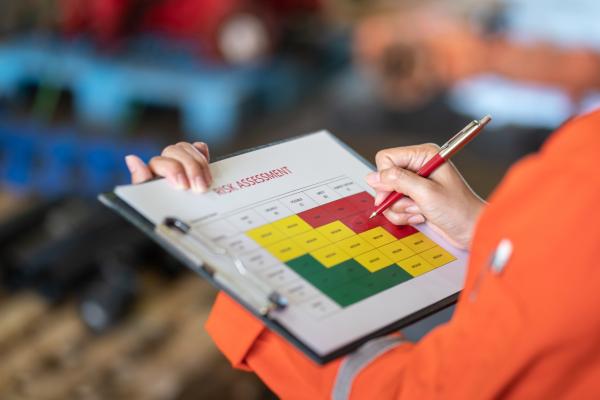
Each identified hazard is then subject to a formal risk assessment. This structured examination evaluates the likelihood and potential severity of harm, taking into account existing control measures. The risk assessment forms the evidential foundation of your safety statement and is a legal requirement under current legislation in Ireland.
iv. Control Measure Development
Where risks are identified, appropriate control measures are recommended. These are practical strategies, procedures, or equipment solutions designed to reduce the risk to an acceptable level. Control measures are documented in the safety statement, giving your organisation a clear, actionable plan for managing each identified risk.
3. Documentation Standards
The safety statement produced by SafeHands is a professional, comprehensive document that meets all statutory requirements and can be presented confidently during a Health and Safety Authority inspection or in the event of a workplace incident.
i. Statutory Requirements
The document is prepared in full compliance with the Safety, Health and Welfare at Work Act 2005 and is aligned with the specific requirements of your industry and business type. It is site-specific, based on a completed risk assessment, and clearly documents the control measures in place to manage identified risks.
ii. Clear and Accessible Format
SafeHands prepares safety statements in a clear, accessible format that can be easily understood by employees, managers, and inspectors alike. The document includes a complete hazard analysis, the results of the risk assessment survey, and the recommended control measures for each identified risk.
iii. Employee Consultation
Irish health and safety legislation requires that employees be consulted in the development and review of the safety statement. SafeHands can advise on how to fulfil this requirement and ensure that your consultation process is appropriately documented within the statement.
4. Industry-Specific Considerations
The hazards and risks present in any workplace are shaped by the nature of the business, the activities carried out, the equipment used, and the working environment. SafeHands has experience across a broad range of industries in Ireland and tailors every safety statement accordingly.
i. Tailored Safety Statements
Whether your organisation is involved in food production, construction, retail, childcare, healthcare, or office-based services, the SafeHands safety statement will reflect the actual risks present in your specific environment. Generic documentation does not meet the requirements of current legislation and provides no meaningful protection for your organisation.
ii. Sector-Specific Hazards
Different industries present distinct categories of risk. Healthcare environments, for example, present manual handling and infection control hazards. Construction sites involve risks related to working at height, machinery, and hazardous materials. SafeHands ensures that your safety statement addresses the hazards relevant to your sector.
5. Implementation Support
Once the safety statement is finalised, SafeHands arranges a formal meeting with management to present and explain the documentation, ensuring that those responsible for health and safety within your organisation fully understand its contents and obligations.
i. Communication to Staff
The safety statement must be brought to the attention of all employees and made accessible in the workplace. SafeHands can advise on how to communicate the safety statement effectively within your organisation, including how to present key information to different employee groups.
ii. Training Requirements
In some cases, the risk assessment process may identify training needs that should be addressed to support the control measures recommended in the safety statement. SafeHands provides a comprehensive range of health and safety training services and can advise on the most appropriate courses for your team.
6. Review and Update Services
A safety statement is not a static document. It must be reviewed regularly and updated whenever there is a significant change to the business, such as new equipment, a change in work practices, or a workplace incident. SafeHands can assist with ongoing review and update services to ensure your documentation remains current, accurate, and fully compliant with current legislation in Ireland.
7. Frequently Asked Questions
What is included in safety statement preparation services?
Services include a site visit to conduct a risk assessment, hazard identification, documentation of control measures, preparation of a site-specific safety statement, and a management handover meeting to explain the documentation.
Why should I use professional safety statement preparation?
A professionally prepared safety statement ensures legal compliance, accurately reflects your actual workplace hazards, and provides meaningful protection for your organisation and its directors in the event of an inspection or incident.
How can I enquire about safety statement services?
Submit an enquiry via the SafeHands website or contact the team directly by phone or email. SafeHands will discuss your requirements and arrange an initial site visit.
What payment methods are available?
SafeHands accepts payment in full via Stripe, bank transfer, or by phone. Full payment is required upfront; no staged payments or payment plans are available.
Do you visit our workplace?
Yes. A site visit is an essential part of the safety statement preparation process. SafeHands must inspect your premises in order to produce a genuine, site-specific safety statement.
8. Contact SafeHands
Contact the SafeHands team to discuss safety statement preparation services in Ireland that protect your organisation, your employees, and your directors with documentation that fully meets the requirements of current health and safety legislation.
Commission a professionally prepared safety statement for your business in Ireland and replace generic or outdated documentation with a site-specific, risk-assessed document that demonstrates a genuine commitment to workplace safety.