
Risk assessments and safety statements form the foundation of workplace health and safety management. SafeHands Health & Safety Solutions in Ireland provides comprehensive risk assessment services and creates tailored safety statements that ensure legal compliance while genuinely protecting employees. Understanding these essential safety management tools helps organisations create safer workplaces and meet their legal obligations effectively.
Table of Contents
- What Are Risk Assessments and Safety Statements?
- Legal Requirements for Risk Assessments
- Safety Statement Legal Requirements
- The Risk Assessment Process
- Common Workplace Hazards to Assess
- Creating Effective Safety Statements
- Conducting Specialised Risk Assessments
- Involving Employees in Risk Assessment
- Risk Assessment for Small Businesses
- Maintaining and Reviewing Risk Assessments
- Common Risk Assessment Mistakes to Avoid
- The Business Case for Effective Risk Assessment
- Professional Risk Assessment Services
- Safety Statement Development Services
- Taking Action on Risk Assessment and Safety Statements
1. What Are Risk Assessments and Safety Statements?
Risk assessment is the process of identifying workplace hazards, evaluating associated risks, and determining appropriate control measures. This systematic approach examines all work activities, environments, and equipment to understand what could cause harm and how likely harm is to occur.
The risk assessment process considers who might be harmed and how. Different groups may face different risks – experienced employees, new starters, young workers, pregnant employees, and visitors all require consideration. Identifying vulnerable groups ensures controls protect everyone.
Safety statements are written documents that outline an organisation's health and safety management arrangements. They describe the organisation's safety policy, how responsibilities are allocated, and what systems are in place to manage workplace risks. Safety statements make safety management visible and accountable.
The relationship between risk assessments and safety statements is fundamental. Risk assessments identify specific hazards and required controls, while safety statements describe the overall management system ensuring those controls are implemented and maintained. Together, they create comprehensive safety management frameworks.
2. Legal Requirements for Risk Assessments
Current legislation in Ireland requires employers to conduct risk assessments for workplace activities. This legal duty isn't optional – it's a fundamental responsibility that applies to all employers regardless of business size or sector. The requirement reflects the principle that prevention depends on understanding risks.
Competent persons must conduct risk assessments. Competence comes from training, experience, or knowledge appropriate to the complexity of risks being assessed. For many workplaces, managers or employees with suitable training can conduct assessments. Complex or specialised risks may require expert input.
Documentation requirements depend on employer size. Employers with three or more employees must record significant findings of risk assessments. Written records demonstrate compliance, provide references for employees, and support consistent implementation of controls.
Review and revision obligations ensure risk assessments remain current. Assessments must be reviewed if they're no longer valid, following significant changes to work activities, after accidents or near misses, or when new hazards are identified. Regular reviews maintain effectiveness.
3. Safety Statement Legal Requirements
Legislation in Ireland requires employers with three or more employees to prepare written safety statements. This document must be brought to employees' attention, and employees must have reasonable access to it. The requirement ensures employees understand safety arrangements.
Safety statements must contain specific elements. These include the organisation's safety policy, how responsibilities are allocated, the arrangements for managing health and safety, and details of specific hazards and control measures. Each element serves a distinct purpose.
Consultation with employees is required when preparing safety statements. Employees have valuable insights into practical workplace conditions and can identify hazards or control deficiencies. Meaningful consultation improves safety statement quality and increases employee ownership.
Regular review ensures safety statements remain relevant. Reviews should occur at least annually, following significant changes, or after incidents. Outdated safety statements fail to protect employees and may not demonstrate compliance with current legislation.
4.The Risk Assessment Process
Identifying hazards requires systematic examination of work activities. Walk through the workplace observing operations, talk with employees about their experiences, review accident and ill-health records, and check manufacturer instructions for equipment. Comprehensive identification is essential – you can't control hazards you haven't identified.
Hazards exist in many forms. Physical hazards include slips, trips, falls, manual handling, noise, vibration, and temperature extremes. Chemical hazards range from cleaning products to industrial substances. Biological hazards include bacteria, viruses, and moulds. Ergonomic hazards relate to workstation design and work organisation.
Evaluating risks involves considering both likelihood and potential severity. A hazard that's very likely to cause minor harm may represent similar risk to one that's unlikely but could cause serious harm. Both dimensions require consideration.
Risk rating systems provide frameworks for prioritising actions. Common approaches use matrices combining likelihood and severity to produce risk ratings such as low, medium, or high. These ratings help allocate resources effectively, addressing highest risks first.
Deciding on control measures requires applying the hierarchy of control. Elimination removes hazards completely. Where elimination isn't possible, substitution replaces hazards with safer alternatives. Engineering controls physically separate people from hazards. Administrative controls modify work practices. Personal protective equipment provides the last line of defence.
Recording findings creates accountability and provides guidance. Risk assessment documents should clearly identify hazards, explain who might be harmed, describe existing controls, rate residual risk, and specify any additional actions needed. Clear documentation supports implementation and review.
Implementing controls translates assessment findings into action. Allocate responsibilities clearly, set realistic timelines, and ensure necessary resources are available. Implementation without proper follow-through wastes assessment effort and leaves employees exposed to risks.
5. Common Workplace Hazards to Assess
Slips, trips, and falls cause many workplace injuries. Wet floors, uneven surfaces, trailing cables, inadequate lighting, and cluttered walkways all create hazards. Risk assessments should cover all areas where people walk, identifying and controlling these common causes of injury.
Manual handling risks affect most workplaces. Even offices involve lifting files, moving furniture, or carrying equipment. Risk assessments must identify manual handling activities, evaluate associated risks, and determine appropriate controls such as mechanical aids or technique training.
Work equipment hazards depend on machinery and tools used. Moving parts, hot surfaces, sharp edges, noise, and vibration all require assessment. Equipment-specific risks need evaluation, with controls including guarding, maintenance, and training.
Electrical hazards pose risks of shock, burns, and fire. Risk assessments should cover fixed electrical installations, portable equipment, and work near overhead or underground power lines. Regular inspection and testing form key controls.
Fire risks exist in all premises. Ignition sources, fuel, and oxygen create fire triangle conditions. Risk assessments identify potential fire scenarios, evaluate escape route adequacy, and determine necessary controls including fire detection, suppression systems, and emergency procedures.
Working at height creates fall risks. Even low heights can cause serious injuries. Risk assessments must cover ladder use, work platforms, roof work, and any situation where falling could cause harm. Controls prioritise eliminating height work or using collective protection such as guardrails.
Confined space work presents multiple hazards including oxygen deficiency, toxic atmospheres, and restricted escape. These high-risk situations require detailed assessment and strict control measures. Permit-to-work systems and continuous monitoring are often necessary.
Lone working increases vulnerability when problems occur. Employees working alone can't easily summon help if injured or taken ill. Risk assessments must consider communication methods, check-in procedures, and emergency response arrangements.
Chemical hazards require assessment of all substances used. Safety data sheets provide vital hazard information. Assessments should consider exposure routes (inhalation, skin contact, ingestion), exposure levels, and appropriate controls including ventilation, containment, and personal protective equipment.
6. Creating Effective Safety Statements
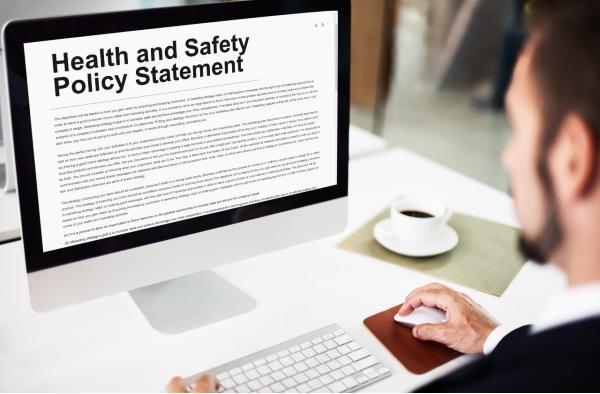
Safety statements should begin with a clear policy statement outlining the organisation's commitment to health and safety. This statement should be signed by the most senior person, demonstrating leadership commitment. Policy statements articulate values and set expectations.
Organisation sections describe how health and safety responsibilities are allocated. This includes defining what directors, managers, supervisors, and employees are responsible for. Clear allocation prevents important tasks falling between gaps and enables accountability.
Arrangements sections detail the systems and procedures for managing specific risks. This includes how risk assessments are conducted, what training is provided, how equipment is maintained, what emergency procedures exist, and how incidents are investigated. Arrangements make policy real.
Specific hazard sections address significant workplace risks identified through assessment. For each major hazard area, the safety statement should explain the risks, who might be affected, what controls are in place, and what employees should do to work safely.
Accessibility ensures employees can refer to safety statements when needed. Online access via intranets works well for office environments. Physical copies should be available where online access isn't practical. Key information can be extracted into accessible formats such as posters or pocket cards.
7. Conducting Specialised Risk Assessments
Display screen equipment (DSE) assessments are required for employees who regularly use computers. Assessments evaluate workstation setup, seating, lighting, and work patterns. Controls include adjustable furniture, breaks from screen work, and eye tests.
Workplace transport assessments cover vehicles used on site, including cars, vans, trucks, forklift trucks, and mobile machinery. Risks include collisions between vehicles and pedestrians, reversing incidents, and loading/unloading activities. Segregation, traffic management, and training form typical controls.
New and expectant mother assessments are required when employees become pregnant or return from maternity leave. Specific risks including heavy lifting, long standing, toxic substances, and infection must be evaluated. Adjustments should support continued safe working.
Young worker assessments consider that young people may lack experience and awareness of risks. Additional hazards may affect their development. Assessments should involve more supervision and training than for experienced workers.
Stress risk assessments examine workplace factors that can harm mental health. Demands, control, support, relationships, role clarity, and change management all require evaluation. Controls focus on job design, management practices, and support systems.
Violence and aggression assessments are necessary where employees face potential violence from customers, service users, or others. Retail, healthcare, education, and public-facing roles often involve these risks. Controls include environmental design, procedures, training, and alarm systems.
8. Involving Employees in Risk Assessment
Employee consultation improves risk assessment quality. People performing tasks understand practical realities that desk-based assessments miss. They know where procedures don't work, what workarounds exist, and what near misses occur. This knowledge identifies risks that might otherwise be overlooked.
Consultation methods vary. Safety committees provide formal structures for employee involvement. Safety representatives can investigate concerns and raise issues. Informal discussions during workplace walk-throughs gather frontline insights. Surveys can reach larger groups.
Communication of findings ensures employees understand risks and controls. Share assessment results through team meetings, notice boards, induction training, and accessible safety statements. Employees need to know both what hazards exist and how to protect themselves.
9. Risk Assessment for Small Businesses
Small businesses face the same legal requirements as larger organisations but typically have simpler operations and fewer resources. Risk assessment approaches should be proportionate – complex documentation isn't necessary when straightforward descriptions suffice.
Template risk assessments provide starting points for common business types. While templates require adaptation to specific circumstances, they offer frameworks that save time. SafeHands can provide templates and guidance appropriate to specific sectors.
External support helps small businesses without in-house expertise. Competent advisors can conduct assessments, prepare safety statements, and provide ongoing guidance. This support ensures compliance while allowing business owners to focus on core operations.
10. Maintaining and Reviewing Risk Assessments
Review schedules should be established from the outset. Annual reviews ensure assessments remain current even when no specific triggers occur. This regular attention maintains focus on risk management and identifies gradual changes that might otherwise be missed.
Trigger events require immediate review. Accidents, near misses, new equipment, process changes, new substances, structural alterations, and regulatory changes all warrant assessment review. Responding promptly to triggers prevents repeated incidents.
Documentation of reviews provides audit trails. Record when reviews occurred, what changes were identified, what actions were taken, and who was responsible. This documentation demonstrates ongoing attention to risk management.
11. Common Risk Assessment Mistakes to Avoid
Generic assessments that don't reflect actual workplace conditions fail to protect employees. Copying templates without adaptation or conducting assessments from desks rather than shopfloors produces documents that look good but don't work in practice.
Inadequate hazard identification leaves risks uncontrolled. Focusing only on obvious hazards while missing less visible risks creates false confidence. Systematic identification using multiple methods finds more hazards than casual observation.
Underestimating risks leads to inadequate controls. Assuming incidents won't happen or that employees will always behave safely results in optimistic risk ratings. Realistic assessment considers what could happen, not just what usually happens.
Unclear control measures don't provide practical guidance. Vague statements such as "be careful" or "follow procedures" don't specify what actions are required. Effective controls are specific, actionable, and clearly communicated.
Failure to implement findings wastes assessment effort. Risk assessments that sit in files while hazards remain uncontrolled don't protect anyone. Implementation must follow assessment, with clear responsibilities and timescales.
12. The Business Case for Effective Risk Assessment
Preventing accidents and ill health reduces direct costs including sick pay, temporary staff, compensation claims, increased insurance premiums, and legal costs. These financial impacts can be substantial, particularly for small businesses where single serious incidents can threaten viability.
Indirect costs often exceed direct costs. Productivity losses from absence, accident investigation time, production delays, damage to equipment or materials, and management time all represent real costs. Preventing incidents avoids these hidden but significant impacts.
Legal compliance prevents enforcement action. Inadequate risk assessment or safety statements can result in improvement notices, prohibition notices, or prosecutions. Beyond financial penalties, enforcement action damages reputation and creates stress for those involved.
Reputation benefits flow from demonstrating care for employees. Organisations known for good health and safety find recruitment easier, retain staff longer, and build positive relationships with customers and suppliers. Safety performance increasingly influences business decisions.
Employee morale and engagement improve in safe workplaces. People who feel cared for and protected are more satisfied, productive, and committed. This psychological contract matters – employees who believe their employer genuinely values their wellbeing respond positively.
13. Professional Risk Assessment Services
Complex workplaces may benefit from professional risk assessment services. Specialists bring expertise in identifying hazards, evaluating risks, and determining appropriate controls. Their experience across multiple organisations in Ireland provides insights into best practice.
Industry-specific knowledge helps assessments reflect sector-specific hazards. Healthcare, construction, manufacturing, hospitality, and other sectors each present particular risks requiring specialised understanding. Sector experience enhances assessment quality.
Objectivity is valuable – external assessors aren't influenced by organisational norms that might blind internal people to hazards. Fresh eyes often spot issues that familiarity obscures. This outside perspective complements internal knowledge.
Time savings can be significant. Organisations without dedicated safety staff find that outsourcing assessments frees management to focus on core business while ensuring thorough, compliant risk assessment.
SafeHands provides comprehensive risk assessment services tailored to your organisation. Our experienced team conducts thorough assessments, identifies all significant hazards, recommends practical controls, and produces clear documentation that meets legal requirements while genuinely protecting your people.
14. Safety Statement Development Services
Professional safety statement preparation ensures compliance while creating useful, practical documents. SafeHands develops safety statements that meet legal requirements and provide real guidance for managing workplace health and safety.
Bespoke development reflects your specific operations, hazards, and circumstances. Template-based safety statements rarely fit perfectly, while custom-developed statements address actual workplace conditions. This tailoring creates more useful, credible documents.
Clear language makes safety statements accessible. Overly technical or legalistic documents aren't read or understood. Effective safety statements communicate clearly with all employees, using straightforward language and logical structure.
Implementation support helps translate documents into action. Simply producing safety statements isn't enough – organisations need help communicating content, training employees, and embedding procedures into daily operations. Implementation support delivers real safety improvements for organisations in Ireland.
15. Taking Action on Risk Assessment and Safety Statements
Risk assessments and safety statements aren't bureaucratic exercises – they're practical tools that prevent injuries, ill health, and fatalities. Organisations that take these responsibilities seriously create safer workplaces, meet legal obligations, and demonstrate genuine care for their people.
SafeHands provides comprehensive risk assessment and safety statement services for businesses in Ireland that ensure compliance while creating real safety improvements. Our experienced team works with you to understand your operations, identify hazards, develop appropriate controls, and produce clear documentation.
Services are delivered at your venue or on-site at your office, with scheduling based on availability. Payment is made upfront via Stripe, bank transfer (invoice with bank details provided), or by phone. To discuss your risk assessment or safety statement requirements, contact SafeHands today. Instructor qualifications are available on request.
Contact SafeHands:
- Phone: +353 1 7979836 / +353 87 3823223
- Email: info@safehands.ie
- Website: www.safehands.ie