
Fast-paced restaurant environments throughout Ireland demand constant physical activity from both kitchen and front-of-house staff. Without proper training, the repetitive lifting, carrying, and bending involved in food service operations can lead to serious musculoskeletal injuries. SafeHands Health & Safety Solutions provides restaurant-specific manual handling training that protects your team while ensuring compliance with health and safety legislation.
Table of Contents
- Introduction to Manual Handling in Restaurants
- Kitchen Manual Handling
- Front of House Manual Handling
- Storage and Stock Management
- Insurance Requirements
- Creating Safe Practices
- Frequently Asked Questions
- Secure Your Restaurant's Future with Expert Manual Handling Training
1. Introduction to Manual Handling in Restaurants
Restaurant operations throughout Ireland involve continuous physical demands that affect staff across both kitchen and front-of-house roles. From chefs lifting heavy stock pans to servers carrying loaded trays, the fast-paced nature of food service creates numerous opportunities for manual handling injuries. SafeHands provides specialist manual handling training designed specifically for restaurant environments, ensuring your team works safely while maintaining the service standards your customers expect.
Compliance with the 2007 Manual Handling Regulation requires that all employees engaged in manual handling tasks receive proper training. In restaurants, this encompasses virtually every role. Understanding correct techniques protects staff from injury, reduces absenteeism, and helps satisfy insurance requirements that increasingly mandate documented training.
ii. Manual Handling Tasks in Food Service
Restaurant work involves constant movement and lifting. Kitchen staff manage heavy cooking equipment, transfer stock from deliveries to storage, and handle waste throughout service. Front-of-house teams carry multiple plates, navigate crowded dining areas with trays, and set up or break down service stations. Bar staff move cases of beverages and glassware. Each task presents injury risks if performed with poor technique.
The repetitive nature of restaurant work means even relatively light loads can cause cumulative injuries over time. A server carrying trays throughout a shift performs hundreds of lifts and carries. Kitchen staff repeatedly bend to access low storage or reach to high shelves. This repetition makes proper technique essential for long-term health.
ii. Common Injuries and Prevention
Manual handling injuries in restaurants typically include back strains from improper lifting, shoulder and neck problems from repeated tray carrying, wrist and hand injuries from gripping hot or heavy items, and knee problems from frequent bending or squatting. Many of these injuries develop gradually through repeated poor technique rather than a single incident.
Prevention focuses on education, awareness, and the development of safe habits. Training equips staff to recognise risky situations, understand proper techniques, and make informed decisions about when to seek assistance or use equipment aids. This knowledge transforms behaviour, significantly reducing injury rates.
2. Kitchen Manual Handling
Kitchen environments present the most varied and demanding manual handling challenges in restaurant operations.
i. Heavy Pot and Pan Handling
Industrial kitchens use large pots and pans that become extremely heavy when filled with food or liquid. A stockpot filled with water can weigh 20 kilograms or more, making it heavy enough to require careful handling to prevent injury. Training covers assessing pot weight before lifting, using both hands with secure grips, and employing team lifting for particularly heavy items.
Staff learn to plan movements carefully, ensuring clear pathways before lifting hot, heavy pots. Using pot stands at appropriate heights reduces the need to lift from floor level. Understanding the centre of gravity helps staff balance loads safely during transfers.
ii. Stock and Delivery Management
Receiving deliveries often means managing heavy boxes and sacks in loading areas. Items must be moved quickly to the appropriate storage while maintaining cold chain integrity for refrigerated goods. Training emphasises inspecting load integrity before lifting, breaking down deliveries into manageable components, and using trolleys or hand trucks where possible.
Storage organisation significantly impacts manual handling safety. Training includes guidance on storing heavy items at waist height to avoid excessive bending or reaching, rotating stock safely using the FIFO (First In, First Out) principle, and maintaining clear access to storage areas.
iii. Waste Handling
Commercial waste bins can become very heavy, especially when containing food waste or glass. Staff learn to avoid overfilling bins, use wheelie bins appropriately, and employ team assistance for heavy waste bags. Understanding bag weight limits and using appropriate bag sizes helps prevent tears and associated hazards.
3. Front of House Manual Handling
Front-of-house staff face different challenges that require specific techniques and awareness.
i. Tray Carrying Techniques
Proper tray carrying protects servers from shoulder, neck, and back strain. Training covers balancing loaded trays correctly, maintaining good posture while carrying, and setting down trays safely. Staff learn to assess tray weight before lifting and to make multiple trips rather than overloading.
One-handed tray carrying requires particular attention to technique and load distribution. Training includes practical demonstrations of safe carrying heights, proper weight distribution across the tray, and navigating obstacles while maintaining control.
ii. Table Setting and Clearing
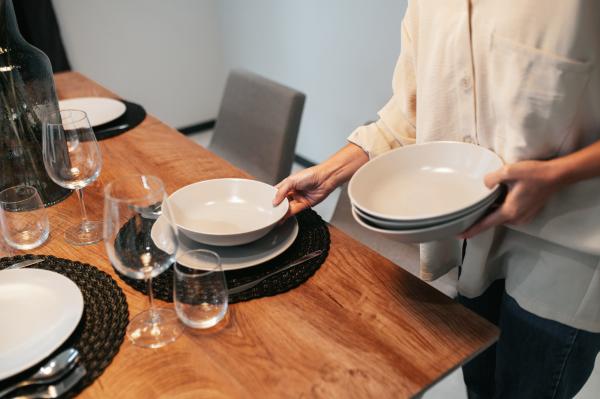
While individual plates may seem light, carrying multiple items repeatedly throughout a shift creates cumulative strain. Staff learn to stack plates safely, avoiding excessive height that compromises visibility or balance; carry glassware securely using appropriate grips; and use trays or trolleys for greater clearance.
Bending to clear low tables requires particular attention. Training emphasises maintaining neutral spine positions, using leg muscles rather than back muscles, and avoiding twisting while holding items.
iii. Service Trolley Use
Where restaurants use service trolleys for food delivery or clearing, proper technique prevents accidents. Training covers loading trolleys with heavy items at the bottom to maintain stability, ensuring clear visibility when pushing, and safely managing trolleys on ramps or uneven surfaces.
4. Storage and Stock Management
Organised storage significantly impacts manual handling safety throughout restaurant operations.
i. Rotating Stock Safely
Stock rotation requires moving items to access older stock positioned at the back of shelves or in lower positions. Training teaches staff to remove items from the front, retrieve older stock safely, and replace items systematically. Using step stools rather than stretching for high items prevents falls and strains.
ii. Accessing High Shelves
Reaching for items on high shelves can lead to items falling, loss of balance, and shoulder strain. Staff learn to use appropriate step stools or ladders, avoid reaching while holding other items, and ask for assistance with heavy items on high shelves. Storing frequently used items at waist height reduces the need for high reaching.
iii. Walk-in Cooler Safety
Walk-in coolers and freezers present additional challenges due to temperature, potentially slippery surfaces, and the need to work quickly to maintain temperature control. Training addresses wearing appropriate footwear for grip, taking particular care when lifting in cold conditions affecting muscle flexibility, and ensuring clear pathways to prevent trips while carrying items.
5. Insurance Requirements
Insurance providers increasingly require documented manual handling training for restaurant businesses.
i. Training Documentation
Insurance companies assess risk based partly on training records. SafeHands provides individual certificates for all participants, valid for three years, along with comprehensive training documentation for your records. This evidence demonstrates your commitment to staff safety and compliance with current legislation.
ii. Compliance Benefits
Documented training may result in more favourable insurance terms and provide protection in the event of claims. Demonstrating that staff received appropriate training and understood safe working practices supports your position, should workplace injuries occur.
6. Creating Safe Practices
Training provides essential knowledge, but lasting safety requires integrating safe practices into daily operations.
Encouraging staff to report hazards such as damaged equipment, cluttered walkways, or overly heavy deliveries helps address risks before injuries occur. Regular team briefings can reinforce key messages and share experiences. Management leading by example demonstrates that safety matters at every level.
Building manual handling considerations into standard operating procedures such as specifying team lifts for items over certain weights embeds safety into your culture. This systematic approach creates an environment where working safely becomes habitual.
7. Frequently Asked Questions
What manual handling training do restaurant staff need?
All restaurant staff who engage in lifting, carrying, pushing, or pulling loads require manual handling training covering safe techniques, hazard recognition, and compliance with legislation. Training should be refreshed every three years to maintain competence.
Why do insurance firms require manual handling training for restaurants?
Insurance companies recognise that properly trained staff sustain fewer injuries, reducing claims frequency and severity. Many insurers now mandate documented training as a policy condition, reflecting high injury rates in food service environments.
How can I enquire about restaurant manual handling training?
Contact SafeHands at +353 1 7979836 or +353 87 3823223, email info@safehands.ie, or complete our website enquiry form. We'll discuss your restaurant's specific requirements and arrange convenient training dates.
What payment methods are available?
SafeHands accepts payment via Stripe, bank transfer (we'll email an invoice with bank details), or payment by phone. Full payment is required upfront with no staged payment options.
Is training delivered at our restaurant?
Yes, all training is delivered onsite at your restaurant premises in Ireland. This ensures maximum relevance to your specific environment and minimises disruption to your operations.
8. Secure Your Restaurant's Future with Expert Manual Handling Training
Protecting your restaurant staff in Ireland through specialised manual handling training safeguards your team, ensures regulatory compliance, and satisfies insurance requirements. SafeHands delivers practical, food service-specific training onsite at your restaurant, accommodating up to 12 participants per three-hour session. Certification remains valid for three years.
Contact SafeHands today to enquire about restaurant manual handling training. We accept payment via Stripe, bank transfer, or phone. Call +353 1 7979836 or +353 87 3823223, or email info@safehands.ie.