
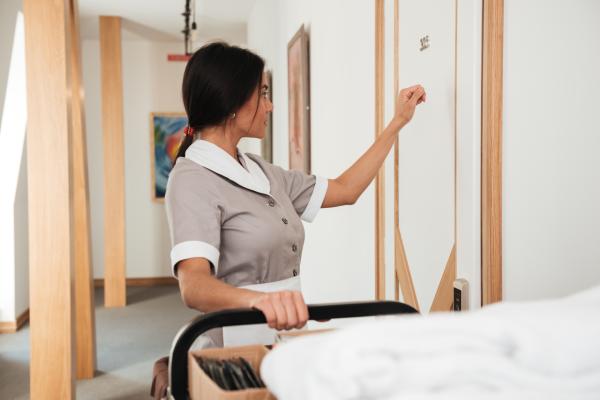
The hospitality industry places significant physical demands on staff across every department, from housekeeping to kitchen operations. Manual handling injuries are among the most common workplace incidents in Irish hotels, affecting productivity and staff well-being. SafeHands Health & Safety Solutions delivers comprehensive manual handling training tailored specifically for hotel environments, protecting your team while meeting insurance and regulatory requirements.
Table of Contents
- Introduction to Manual Handling in Hotels
- Department-Specific Manual Handling
- Common Hotel Manual Handling Hazards
- Safe Handling Techniques for Hotels
- Insurance Requirements and Documentation
- Creating a Safety Culture
- Frequently Asked Questions
- Invest in Your Hotel Team's Safety and Well-being
1. Introduction to Manual Handling in Hotels
Hotels across Ireland present diverse manual handling challenges that affect staff across every department. From housekeeping teams managing heavy linen to kitchen staff handling stock deliveries, the physical demands of hotel work create significant injury risks if staff lack proper training. SafeHands provides comprehensive manual handling training specifically designed for the hospitality sector, ensuring your team works safely while meeting insurance and regulatory requirements.
The 2007 Manual Handling Regulation requires that all employees engaged in manual handling tasks receive proper training. For hotels, this encompasses virtually every role from front desk to back-of-house operations. Understanding correct techniques protects your most valuable asset your staff while reducing absenteeism and insurance claims associated with manual handling injuries.
i. Diverse Manual Handling Tasks in Hotels
Hotel operations involve constant physical activity. Housekeeping staff bend, lift, and carry throughout their shifts. Kitchen teams handle heavy pots, move stock, and manage waste. Maintenance staff relocate furniture and equipment. Even front-of-house staff assist with luggage and deliveries. This variety means hotel manual handling training must address multiple scenarios and techniques.
Each department faces unique challenges that require tailored approaches. What works for a housekeeper making beds differs from the techniques needed by kitchen staff managing bulk deliveries. Comprehensive training acknowledges these differences while teaching universal principles of safe manual handling.
ii. Importance of Staff Training
Manual handling injuries represent one of the most common workplace injuries in Irish hotels. Back strains, muscle tears, and joint problems can develop from repeated poor technique, even when individual lifts seem manageable. Insurance companies increasingly require documented manual handling training as a condition of coverage, recognising that trained staff sustain fewer injuries.
Beyond compliance and insurance requirements, training demonstrates your duty of care to employees. Staff who understand safe techniques experience less fatigue, fewer injuries, and greater job satisfaction. This investment in employee well-being typically results in reduced turnover and improved service quality.
2. Department-Specific Manual Handling
Different hotel departments encounter distinct manual handling challenges that require specialised knowledge and techniques.
i. Housekeeping Manual Handling
Housekeeping teams face continuous physical demands throughout their shifts. Making beds requires repeated bending and reaching, often in awkward positions. Stripping and replacing bed linen involves lifting mattresses and manoeuvring heavy duvets. Pushing housekeeping trolleys loaded with supplies, linen, and equipment adds to the physical burden.
Training for housekeeping staff focuses on maintaining neutral spine positions while working at bed height, using leg muscles rather than back muscles when lifting, and organising trolleys to minimise awkward reaches. Techniques for flipping mattresses safely and managing particularly heavy items like wet towels are covered in detail.
ii. Kitchen and Food Service
Kitchen environments present unique manual handling challenges, including lifting heavy pots filled with food or liquid, transferring stock from deliveries to storage areas, managing waste bins and recyclables, and moving cooking equipment for cleaning. The combination of weight, heat, and slippery surfaces creates additional hazards.
Staff learn to assess load weights before lifting, use appropriate equipment, such as trolleys where possible, and employ team lifting for particularly heavy items. Training emphasises the importance of good housekeeping to prevent slips while carrying items, and proper techniques for handling awkwardly shaped kitchen equipment.
iii. Maintenance and Stores
Maintenance staff and stores personnel handle some of the heaviest and most awkward items in hotel operations. Furniture relocation, equipment repairs requiring part removal, stock receiving and distribution, and bulky item storage all require careful manual handling.
Training covers assessing whether items can be moved safely manually or require mechanical assistance, breaking loads into manageable components, and using slide sheets, trolleys, and other aids effectively. Understanding load centres of gravity helps staff safely manage awkward shapes.
iv. Front of House
While front-of-house staff typically handle lighter loads, improper technique can still cause injury. Assisting guests with luggage, restocking brochure stands and supplies, and occasional equipment moves all require correct approaches. Training ensures these staff understand when to offer assistance and how to do so safely, protecting both themselves and guests.
3. Common Hotel Manual Handling Hazards
Recognising specific hazards helps staff avoid injury through awareness and appropriate precautions.
i. Bedding and Linen
Heavy duvets, multiple pillows, and bulky mattress protectors create significant weight, especially when combined with the repetitive nature of room servicing. Wet linen from spills adds unexpected weight. Training addresses techniques for managing these loads while maintaining productivity standards.
ii. Luggage Handling
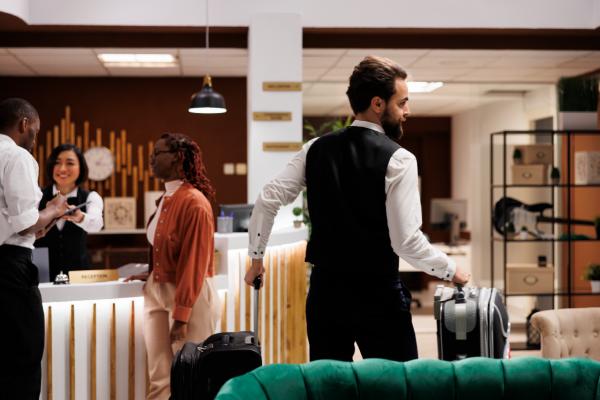
Guest luggage varies dramatically in weight and size. Wheeled cases can be deceptively heavy, while soft bags lack structure, making them difficult to grasp securely. Staff learn to assess luggage weight before lifting, ask guests about contents when necessary, and use appropriate carrying techniques.
iii. Stock Deliveries
Receiving areas often see large, heavy deliveries that must be moved quickly to avoid congestion. Boxes may be stacked high, obscuring vision, or contain shifting contents that affect balance. Training emphasises team lifting of heavy items, proper box-handling techniques, and the importance of clear pathways.
iv. Equipment Movement
Hotels regularly relocate furniture for events, move equipment for maintenance, and rearrange spaces for different functions. These infrequent tasks often see higher injury rates because staff lack familiarity with the items being moved. Training ensures all staff understand basic principles applicable to any manual handling scenario.
4. Safe Handling Techniques for Hotels
Practical techniques form the core of effective manual handling training, giving staff tools they can apply immediately.
i. Making Beds Safely
Bed-making represents the most frequent manual handling task for housekeeping staff. Proper technique involves maintaining a neutral spine by kneeling rather than bending excessively, alternating sides to balance physical strain, and lifting mattress corners with leg strength. These simple adjustments significantly reduce back strain over time.
ii. Using Housekeeping Trolleys
Trolleys should be loaded with heavy items at waist height to avoid excessive bending, organised to minimise reaching across the trolley, and pushed rather than pulled whenever possible. Staff learn to assess trolley stability before moving and to take extra care on slopes and in lifts.
iii. Safe Lifting Methods
Fundamental lifting technique applies across all hotel departments: assess the load first, position feet shoulder-width apart, keep the load close to the body, lift using leg muscles, and avoid twisting while carrying. Training includes practical demonstration and practice to embed these principles.
5. Insurance Requirements and Documentation
Insurance companies increasingly scrutinise health and safety training when assessing hotel policies and claims.
i. Meeting Insurance Obligations
Many insurers now require evidence of manual handling training for hotel staff as a policy condition. This requirement reflects the high frequency of manual handling claims in hospitality settings. Regular training demonstrates your proactive approach to risk management, which can lead to more favourable insurance terms.
ii. Training Records
Maintaining comprehensive training records proves compliance and protects your business in the event of claims. SafeHands provides individual certificates for all participants, valid for three years, along with training documentation for your records. These documents demonstrate due diligence in meeting your duty of care obligations.
6. Creating a Safety Culture
Training provides the foundation, but lasting safety requires cultural commitment throughout your hotel.
Open communication about manual handling concerns encourages staff to report hazards and near-misses. Regular toolbox talks reinforce key messages. Management visibly supporting safe practices demonstrates organisational commitment. This culture shift transforms training from a compliance exercise into genuine behaviour change that protects your team.
7. Frequently Asked Questions
What manual handling training do hotel staff need?
All hotel staff who engage in lifting, carrying, pushing, or pulling loads require manual handling training covering safe techniques, hazard recognition, and compliance with legislation. Training should be refreshed every three years.
Why do insurance companies require manual handling training for hotels?
Insurers recognise that trained staff sustain fewer injuries, reducing claims. Many now require documented training as a policy condition, reflecting the high incidence of manual handling injuries in hospitality settings.
How can I enquire about manual handling training for hotel staff?
Contact SafeHands at 01 7979836 or 087 3823223, email info@safehands.ie, or complete our website enquiry form. We'll discuss your specific requirements and arrange convenient training dates.
What payment methods are available?
SafeHands accepts payment via Stripe, bank transfer (we'll email an invoice with bank details), or payment by phone. Full payment is required upfront.
Is training delivered at our hotel?
Yes, all training is delivered onsite at your hotel premises in Ireland. This ensures relevance to your specific environment and minimises disruption to operations.
8. Invest in Your Hotel Team's Safety and Well-being
Protecting your hotel staff in Ireland through comprehensive manual handling training safeguards your team, meets regulatory requirements, and satisfies insurance obligations. SafeHands delivers practical, hotel-specific training onsite at your venue, accommodating up to 12 participants per three-hour session. Certification remains valid for three years.
Contact SafeHands today to enquire about manual handling training for your hotel team. We accept payment via Stripe, bank transfer, or phone. Call 01 7979836 or 087 3823223, or email info@safehands.ie.