
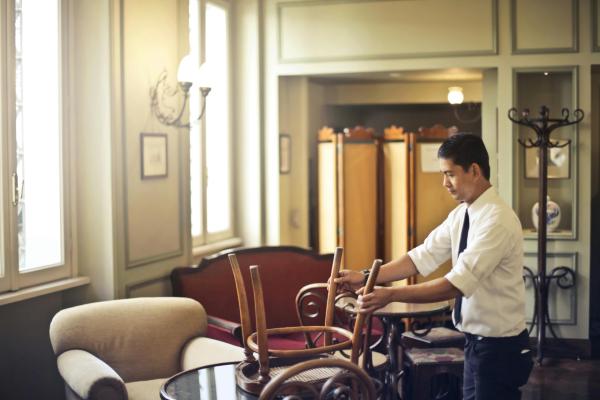
When an insurer looks at a workplace injury claim from a restaurant in Ireland, one of the first questions asked is whether the injured staff member had received manual handling training. If the answer is no – or if the certificate has lapsed – the employer's position weakens considerably.
SafeHands Health & Safety Solutions delivers restaurant-specific manual handling training onsite throughout Ireland, providing the documentation, certification, and practical skills that protect your team and your business – and keeps your insurer happy.
Table of Contents
- Introduction to Restaurant Insurance Requirements
- Restaurant Manual Handling Hazards
- Insurance Documentation
- Comprehensive Restaurant Training
- Insurance Benefits
- Ongoing Compliance
- Frequently Asked Questions
1. Introduction to Restaurant Insurance Requirements
Manual handling documentation has moved from a good idea to a standard insurance condition in Ireland's food service sector. Insurers have the claims data to back up why: physical injury rates in restaurants are consistently high, and businesses without documented training are statistically worse bets. The question is no longer whether to have records – it is whether yours are current.
i. Insurance Firm Mandates
Liability insurers in Ireland's hospitality sector increasingly require documented manual handling training as a policy condition. Trained workforces generate fewer and less severe claims – that is the actuarial reasoning. When a restaurant cannot produce current certificates, cover renewal becomes difficult and claims position weakens. SafeHands provides individual three-year certificates to every participant, along with training records suitable for insurance files.
ii. Importance for Restaurant Businesses
Beyond insurance, restaurant manual handling training is a legal requirement under current legislation. The Safety, Health and Welfare at Work (General Application) Regulations 2007 require training for all employees engaged in manual handling – in a restaurant, that means virtually every role. SafeHands delivers onsite, tailored specifically to the demands of food service environments.
2. Restaurant Manual Handling Hazards
A restaurant is not one environment – it is three or four operating at once, each with its own physical demands. The kitchen, the floor, and the delivery area each produce different injury patterns, and training that does not reflect this distinction is less effective than training that does. SafeHands structures restaurant sessions around each of these areas specifically.
i. Kitchen Risks
Commercial kitchens present significant manual handling challenges. Industrial stockpots filled with liquid can weigh 20 kilograms or more, requiring careful technique and, in many cases, team lifts. Deliveries of heavy produce, flour, and beverage stock arrive frequently and must be processed rapidly. Storage areas are often compact, requiring awkward postures when retrieving items from low or high shelves. Heat, wet floors, and time pressure compound all of these challenges, making proper training not merely useful but essential for preventing the kind of back, shoulder, and wrist injuries that keep kitchen staff off work.
ii. Service Area Risks
Front-of-house hazards are lower in intensity but higher in frequency. A server carrying trays for five hours performs hundreds of lifts per service. The cumulative load on shoulders, neck, and back is substantial even when individual items feel light. Training covers tray-carrying posture, load distribution, and the discipline of making an extra trip rather than overloading.
iii. Storage and Delivery
Managing deliveries and rotating stock are among the higher-risk activities in any restaurant. Heavy boxes must be moved quickly, often in confined spaces, while cold chain requirements for refrigerated goods create pressure to work fast. Walk-in coolers and freezers present additional challenges, including cold-affected muscle flexibility and potentially slippery surfaces. Staff learn to assess load integrity before lifting, break deliveries into manageable components, use trolleys where available, and apply FIFO (First In, First Out) stock rotation techniques safely and without unnecessary strain.
3. Insurance Documentation
When a claim lands, the first document an insurer requests is proof of training. Individual certificates valid for three years, plus session-level training records – that is what SafeHands provides, and it is exactly what insurers and the HSA expect to see.
i. Training Evidence
SafeHands provides individual training certificates to every participant upon successful completion. These certificates, valid for three years, serve as the primary evidence of training for insurance purposes. They confirm that each member of staff has completed a recognised manual handling training programme and can be produced in response to insurer requests, HSA inspections, or workplace injury claims. Having this documentation ready and current is one of the most straightforward risk management steps a restaurant owner can take.
ii. Certification Records
In addition to individual certificates, SafeHands provides training documentation that supports your broader record-keeping obligations. Maintaining accurate, up-to-date training records is a component of demonstrating ongoing compliance with current legislation and forms part of the evidence base that insurers expect to see when assessing a restaurant's risk management practices. These records become particularly important if a claim is made, as they help establish that the employer took reasonable steps to prevent injury.
iii. Compliance Files
A coherent compliance file – certificates, risk assessments, training records – puts a restaurant in a strong position for any formal enquiry. SafeHands' onsite model ensures all documentation reflects the actual environment where staff work, making that file straightforward to build and maintain.
4. Comprehensive Restaurant Training
Effective manual handling training for a restaurant must address the specific tasks performed by each role – kitchen, service, and management each face different demands and risks. SafeHands tailors session content to reflect the actual working environment of your team, ensuring relevance from the first exercise to the last.
i. Kitchen Staff Training
For kitchen teams, training focuses on the tasks that present the greatest risk: heavy pot and pan handling, stock and delivery management, and waste handling. Staff learn to assess pot weight before lifting, use both hands with secure grips, plan pathways before moving hot or heavy items, and employ team lifting where required. Principles of load assessment and risk recognition are applied directly to the kitchen context, ensuring that what participants learn in the session is immediately applicable during the next service.
ii. Serving Staff Training
Front-of-house training addresses tray-carrying technique, posture during service, safe plate-stacking and carrying, and the ergonomic risks associated with bending to clear low tables. Participants learn how to maintain a neutral spine, use leg muscles rather than back muscles, and avoid twisting while holding items. Practical demonstrations and exercises make these techniques concrete and immediately applicable, giving service staff the foundation to work more safely across every shift.
iii. Management Training
When supervisors understand manual handling risks and model correct technique, the culture of the operation changes. Management training covers risk assessment responsibilities, the legal framework, and how to embed safe practices into daily procedures because compliance depends as much on what management does as on what frontline staff are trained to do.
5. Insurance Benefits
Documented manual handling training does more than satisfy a regulatory requirement, it delivers tangible financial and operational benefits across the business. The following section outlines the three most significant ways in which training investment translates into insurance value.
i. Claims Prevention
The most direct insurance benefit of manual handling training is a reduction in the frequency and severity of workplace injury claims. Trained staff sustain fewer injuries, and when injuries do occur, documented training demonstrates that the employer took reasonable steps to prevent them – a factor that influences how claims are assessed and resolved. Prevention is always less costly than compensation, making training one of the highest-return investments a restaurant business can make.
ii. Premium Reduction
Insurance providers assess risk based on a range of factors, and documented training records are among them. Businesses that can demonstrate consistent, up-to-date manual handling training for their workforce may benefit from more favourable premium calculations or policy terms over time, as insurers recognise the lower risk profile associated with a well-trained team. The financial benefit of even a modest premium reduction can offset a significant portion of training costs over a standard policy period.
iii. Cover Maintenance
Ensuring that training records are current and certifications are renewed before they expire is an important part of maintaining uninterrupted insurance cover. Gaps in documentation can create vulnerabilities at exactly the moment a claim is made. SafeHands can assist with refresher training as certification periods approach renewal, keeping your records current and your cover secure throughout the full three-year cycle.
6. Ongoing Compliance
Compliance requires maintenance. Staff change, tasks evolve, certifications expire. Treating manual handling training as a recurring commitment rather than a one-off is what keeps a restaurant genuinely compliant rather than periodically catching up.
To arrange training for your restaurant, contact SafeHands via the enquiry form at safehands.ie, call 01 7979836 or 087 3823223, or email info@safehands.ie. Payment is accepted via Stripe, bank transfer (invoice with bank details by email), or by phone. Full payment is required upfront; no staged payments or payment plans are available.
7. Frequently Asked Questions
Why do insurance firms require restaurant manual handling training?
Insurers recognise that trained staff sustain fewer injuries, reducing claims frequency and cost. Documented training is increasingly a standard policy requirement for food service businesses in Ireland.
What documentation is needed for insurance purposes?
Individual training certificates valid for three years, along with supporting training records. SafeHands provides both upon course completion.
How can I enquire about insurance-compliant training?
Use the enquiry form at safehands.ie, call 01 7979836 or 087 3823223, or email info@safehands.ie.
What payment methods are available?
Stripe, bank transfer, or by phone. Full payment is required upfront with no staged payment options.
Is training delivered at our restaurant?
Yes. All training is delivered onsite at your restaurant premises in Ireland. SafeHands does not operate its own training facilities.