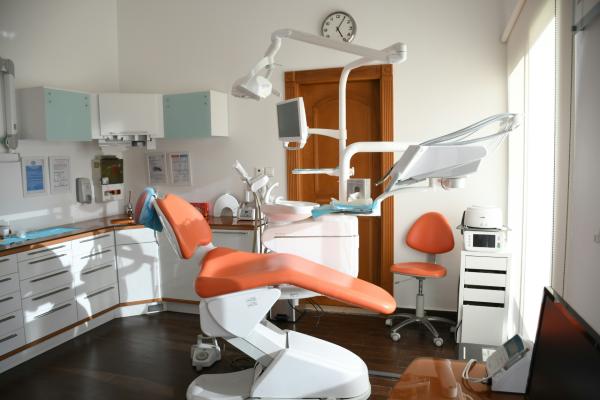
A patient in your chair is in a position of complete trust. They cannot easily get up and leave. If something goes wrong, a vasovagal episode, anaphylaxis, a cardiac event, the response has to come from you and your team, immediately, without waiting for someone else to take charge. First Aid Training for Dentists from SafeHands Health & Safety Solutions is built around that reality, delivering onsite emergency preparedness training specifically designed for the dental practice environment.
Table of Contents
- Introduction to First Aid in Dentistry
- Legal and Ethical Considerations
- Essential First Aid Skills for Dentists
- Specific Scenarios Requiring First Aid Intervention
- First Aid Equipment and Resources
- Implementing a First Aid Programme
- Frequently Asked Questions
1. Introduction to First Aid in Dentistry
Dental practices are clinical environments, and clinical environments carry clinical risk. The emergencies that arise in a dental setting are not hypothetical, they are documented, they are recurrent, and they require a prepared team to manage them effectively.
i. Importance of First Aid Training for Dental Professionals
The Dental Council's Code of Practice requires dental professionals to undertake recognised training in Basic Life Support, cardiopulmonary resuscitation, and the management of medical emergencies. This is not an optional professional development choice, it is a defined obligation that applies to the whole practice team, clinical and non-clinical alike. Emergencies do not confine themselves to the surgery. A patient can deteriorate in the waiting room, at reception, or during a routine examination. Having every member of the team trained is what enables a coordinated response rather than a chaotic one.
ii. Overview of Common Medical Emergencies
Patient anxiety, procedural positioning, local anaesthetics, latex, and other agents used in treatment are all established factors in the emergencies most likely to arise in a dental setting, vasovagal syncope, anaphylaxis, cardiac arrest, airway obstruction, seizures, stroke, and diabetic emergencies. A dental team that has trained specifically for these scenarios is substantially better placed to manage them than one that has completed a generic workplace first aid course.
2. Legal and Ethical Considerations
Understanding where the legal and professional obligations sit is not a formality, it shapes what adequate preparation actually looks like for a dental practice and everyone working in it.
i. Duty of Care and Professional Responsibilities
Every dental professional carries a duty of care to every patient in their practice. That duty does not pause during an emergency, it intensifies. The ability to maintain an airway, initiate CPR correctly, use an AED, and manage an anaphylactic reaction while waiting for emergency services is not a supplementary skill. It is a core component of safe clinical practice. Reception staff and practice managers are often the first point of contact when a patient begins to deteriorate, their ability to recognise and respond is as important as any clinical intervention that follows.
ii. Compliance with Current Legislation in Ireland
Under current legislation, employers in Ireland have a duty of care that extends to the health and safety of everyone on their premises, including patients. For dental practices, this aligns directly with the Dental Council's requirements on emergency preparedness. Documented training provides the evidence of compliance that professional regulators and health and safety inspections will look for. A certificate that has lapsed is not evidence of compliance, it is evidence of a gap.
3. Essential First Aid Skills for Dentists
The core of the course is practical. Participants do not leave having observed procedures, they leave having performed them repeatedly, in scenarios that reflect the environment they actually work in.
i. Basic Life Support Techniques
The SafeHands First Aid for Dental Practices course runs for approximately five hours, delivered onsite at your practice, with sessions capped at ten participants to ensure every person gets adequate hands-on practice time. The course covers CPR for adults, children, and infants, compression rate, depth, recoil, rescue breaths, single and two-rescuer scenarios, and AED operation in full, including pad placement, rhythm analysis, and resumption of CPR after a shock. Team resuscitation dynamics are addressed directly, because a dental practice is not a hospital resuscitation team and the course reflects that.
ii. Managing Choking and Respiratory Distress
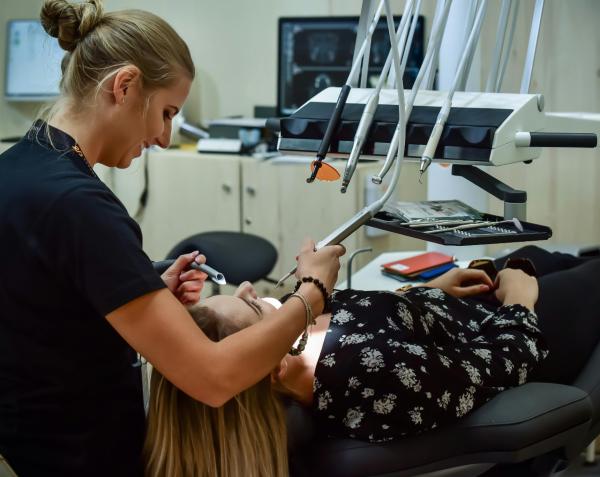
Airway risk in a dental setting is structural, not incidental, the patient's position, the instruments in use, and the materials being worked with all contribute to a specific risk profile. The course covers airway management for adults, children, and infants, including recognition of complete and partial obstruction and the appropriate response for each. Participants also work through respiratory distress arising from anaphylaxis, asthma, and anxiety, all of which present with some regularity in dental patients.
4. Specific Scenarios Requiring First Aid Intervention
Some emergencies are more likely in a dental context than in a general workplace. The course addresses these directly rather than treating them as edge cases within a broader framework, because in a dental setting they are not edge cases at all.
i. Handling Allergic Reactions in Dental Patients
Latex, local anaesthetics, and other agents used in dental treatment are established anaphylaxis triggers. The course covers recognition of early signs, the immediate first aid response, and handover to emergency medical services, including what information to provide and how to communicate it clearly under pressure.
ii. Responding to Cardiac Emergencies
Cardiac events can occur in any patient, at any age, in any part of the practice, and anxiety, a constant in the dental context, is itself a significant contributor. The course trains participants to recognise a cardiac emergency, initiate CPR immediately, deploy an AED correctly, and manage the structured handover to emergency services including recording of information and communication of roles. This handover moment is frequently underprepared in generic first aid training and is addressed directly here.
5. First Aid Equipment and Resources
Training and equipment work together. A team that knows what to do but cannot locate or operate the relevant equipment is not fully prepared, and the course addresses both sides of that.
i. Essential First Aid Kits for Dental Practices
The course covers what equipment a dental practice should have available, how it should be maintained, and where it needs to be located to be accessible when needed. This includes oxygen, AED, emergency drugs appropriate to a dental setting, and basic airway management equipment, with participants developing a working understanding of each item, not just its presence.
ii. Training Resources and Certification Options
On successful completion, every participant receives a certificate covering Basic Life Support, AED training, and medical emergencies, valid for two years. Trainer credentials are available on request. All of SafeHands' training is delivered onsite at the client's premises.
6. Implementing a First Aid Programme
Training equips individuals. A programme equips the practice. The difference matters when an emergency unfolds in real time and every member of the team needs to know their role without being told.
i. Developing First Aid Protocols for Dental Teams
A trained team without a clear emergency protocol is less effective than it should be. The course supports practices in structuring their emergency response, who takes which role, how the call to emergency services is made, how the team supports the lead responder, and how information is recorded during and after an incident.
ii. Regular Training and Updates for Dental Staff
Skills drift and guidelines change. First aid certification is valid for two years, and refresher training before expiry is strongly recommended, both to maintain the certificate and because CPR guidance evolves and skills deteriorate without practice. For practices with multiple staff members, staggering renewal dates ensures continuous certification without everyone needing to renew at once.
Enquire about First Aid for Dental Practices training with SafeHands at 01 7979836, 087 3823223, info@safehands.ie, or via the enquiry form at safehands.ie. Payment via Stripe, bank transfer, or phone, full upfront payment required, no staged payments or payment plans.
7. Frequently Asked Questions
What is included in first aid training for dentists? Basic Life Support, CPR for adults, children and infants, AED operation, airway management, anaphylaxis response, cardiac emergency management, seizure and stroke recognition, team resuscitation dynamics, and handover to emergency medical services.
How can I enquire about onsite first aid training for my dental practice? Contact SafeHands at 01 7979836, 087 3823223, info@safehands.ie, or via the enquiry form at safehands.ie. Scheduling is arranged based on trainer availability.
What payment methods are accepted for first aid training courses? Stripe, bank transfer (invoice emailed), or by phone. Full upfront payment required, no staged payments or payment plans.
Are the training courses delivered at our dental practice? Yes. All SafeHands training is delivered onsite at the client's premises. SafeHands does not have its own training facilities.
How long is the certificate valid? Two years from the date of completion. Refresher training is available before the certificate lapses to maintain continuous certification across your practice team.