
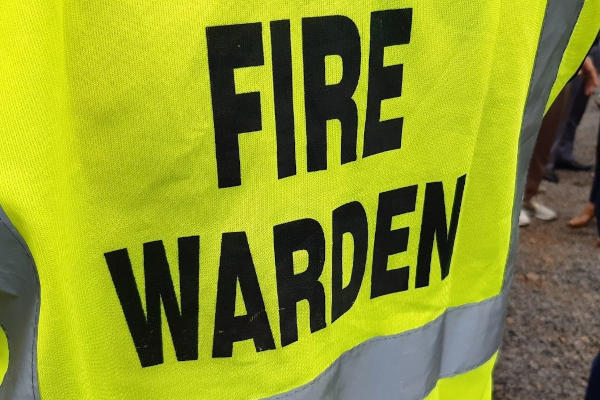
Putting someone's name on a fire warden rota is not the same as training them. The Safety, Health and Welfare at Work Act 2005 is specific on this point: employers must designate competent persons to implement emergency procedures. Competence has a meaning in that context. It means training, knowledge, and demonstrated ability, not a job title. SafeHands Health & Safety Solutions delivers Fire Warden/Marshal Training on-site at premises across Ireland, meeting that standard in full.
Table of Contents
- Introduction to Fire Warden Training
- Fire Warden Responsibilities
- Comprehensive Training Content
- Practical Skills Development
- Creating Effective Fire Safety Teams
- Certification and Ongoing Development
- Frequently Asked Questions
1. Introduction to Fire Warden Training
What fire wardens are required to do, and what the law says about how they must be prepared to do it, are the two questions this section addresses.
i. Role of Fire Wardens in Irish Workplaces
Fire wardens, also known as fire marshals, are the designated personnel responsible for implementing a workplace's emergency plan during a fire. Their role spans prevention, response, and post-incident review. They are the people who ensure an evacuation happens in an orderly and complete way, who check that everyone has reached the assembly point, who liaise with the attending fire service, and who carry out the routine inspections that identify fire hazards before they become emergencies.
ii. Current Legislation Requirements
Under the Safety, Health and Welfare at Work Act 2005, employers in Ireland are legally obliged to prepare a written emergency plan, establish emergency response procedures, and designate trained, competent persons to implement them. The term 'competent person' has a specific meaning here: someone who has received appropriate training, has the relevant knowledge, and can fulfil the role effectively. Designation alone does not create competence.
2. Fire Warden Responsibilities
The warden role is not a single action performed during an alarm. It runs continuously, before, during, and after any emergency, and each phase has defined tasks that require preparation.
i. Fire Prevention Duties
Before any alarm sounds, a warden's most valuable contribution is preventive: carrying out scheduled inspections to verify that detection and alarm systems are operational, escape routes and fire doors are unobstructed, extinguishers are correctly positioned and within service intervals, and combustible materials are stored appropriately. A clear record of completed checks demonstrates that fire safety monitoring is ongoing rather than periodic.
ii. Emergency Response Leadership
During a fire emergency, the warden takes a leadership role in directing the evacuation in line with the site's emergency plan. This includes initiating and directing evacuation, performing systematic area sweeps to confirm that all persons have left, managing individuals who require assistance to evacuate, coordinating the assembly point roll call, and providing the attending fire service with a structured briefing on building occupancy, the location of the fire, any hazardous materials present, and the fire protection systems in the building.
iii. Assisting with Evacuations
Effective evacuation management requires knowing who is in the building at any given time, including visitors and contractors; understanding all available routes; identifying which individuals have Personal Emergency Evacuation Plans in place; and coordinating with other wardens across large or multi-storey premises. The course prepares wardens for these scenarios, including situations where the primary route is unavailable.
3. Comprehensive Training Content
An effective warden needs to understand fire behaviour, know the applicable procedures, and communicate clearly under pressure. The course addresses all three and their connection.
i. Advanced Fire Safety Knowledge
The SafeHands fire warden course, approximately five hours, delivered on-site at your premises, provides substantive instruction in fire science. This covers the conditions required for ignition and sustained combustion; the classification of fires by fuel type and the corresponding extinguishing agents; the dynamics of fire spread through structural voids, ventilation pathways, and compartmentation failures; and the toxic properties of combustion gases, which are the primary cause of fatalities in building fires.
ii. Emergency Procedures
The course covers the principal evacuation strategies used in Irish workplaces: simultaneous total evacuation, phased evacuation by floor or zone, and progressive horizontal evacuation, the standard approach in healthcare settings where patient movement is constrained. Wardens learn the procedural requirements of each strategy, how to adapt them in real time, and how to develop and review Personal Emergency Evacuation Plans for those who cannot self-evacuate.
iii. Communication Skills
Effective emergency response depends on clear, calm communication, with building occupants during evacuation, with other wardens coordinating a multi-zone response, and with the fire service on arrival. The course addresses these communication requirements directly: how to give clear, audible evacuation instructions, how to relay information to the fire service in a structured, useful format, and how to manage the assembly point to enable an accurate roll call without creating confusion.
4. Practical Skills Development
Classroom knowledge of fire-fighting equipment and evacuation procedures is not the same as being able to deploy them correctly under pressure. This section covers what practical competence actually requires.
i. Using Fire Fighting Equipment
The course covers the selection and operation of water, foam, CO2, dry powder, and wet chemical extinguishers, including the PASS technique, the operational limitations of each type, and the classes of fire to which each applies. Critically, wardens also learn when not to use portable fire-fighting equipment, the criteria under which suppression should be abandoned in favour of immediate evacuation. Understanding both sides of this decision is essential for safe emergency response.
ii. Managing Evacuations
Evacuation management in a real emergency differs from a fire drill. The course addresses the complications that arise: blocked routes, individuals reluctant to leave, visitors unfamiliar with the building, and situations where the fire's location makes the standard evacuation route unavailable. Wardens develop the decision-making skills to manage these situations calmly and effectively, rather than applying a fixed procedure that breaks down when conditions don't match expectations.
iii. Coordinating Emergency Services
When the fire service arrives, the warden's job is to provide accurate, useful information quickly: the location of the fire, how many people are accounted for, the presence of hazardous materials, and the status of fire protection systems. The course prepares wardens for this briefing, what to gather and how to communicate it clearly under pressure.
5. Creating Effective Fire Safety Teams
One trained warden does not constitute a fire safety team. Coverage across shifts, floors, and zones requires a structured approach to warden numbers and regular testing of how that structure performs.
i. Team Structure
There is no single fixed number of fire wardens that suits every premises. The appropriate number depends on the size and layout of the building, the number of occupants, the shift pattern, and whether there are areas with specific evacuation requirements. The principle is that sufficient wardens must be available at all times when the premises are occupied to ensure the emergency plan can actually be carried out. The training addresses warden coverage as part of emergency plan development.
ii. Regular Drills and Practice
A fire drill is not just a rehearsal; it's an evaluation. It tests whether the emergency plan works in practice, reveals weaknesses in warden coverage or evacuation routes, and gives wardens experience managing an evacuation under realistic conditions. The training covers how to plan, conduct, and debrief a drill, and how to use the findings to improve the emergency plan.
6. Certification and Ongoing Development
Participants who complete the SafeHands fire warden course receive a certificate valid for two years. Sessions accommodate up to twelve participants and are delivered on-site at the client's premises across Ireland. SafeHands does not operate its own training facilities. Scheduling is subject to trainer availability. Trainer credentials are available on request.
Refresher training is available before the certificate lapses. Fire safety legislation and best practice can change, and procedures that were current two years ago may need updating. Keeping warden certification current is part of maintaining the emergency plan's credibility and compliance. Enquire with SafeHands at 01 7979836, 087 3823223, or info@safehands.ie. Payment via Stripe, bank transfer, or phone, full upfront payment required.
7.Frequently Asked Questions
What legislative requirements does fire warden training address?
The Safety, Health and Welfare at Work Act 2005 and associated fire safety legislation, requiring employers to designate trained, competent persons to implement emergency procedures.
Who should be designated as a fire warden?
Supervisors, team leaders, health and safety officers, or facilities personnel who are regularly present on site. Sufficient wardens must be designated to cover all operational shifts and areas.
How do I arrange training?
Contact SafeHands at 01 7979836, 087 3823223, info@safehands.ie, or via the enquiry form at safehands.ie.
What are the payment options?
Stripe, bank transfer (invoice emailed), or by phone. Full upfront payment, no deposits, staged payments, or payment plans.