
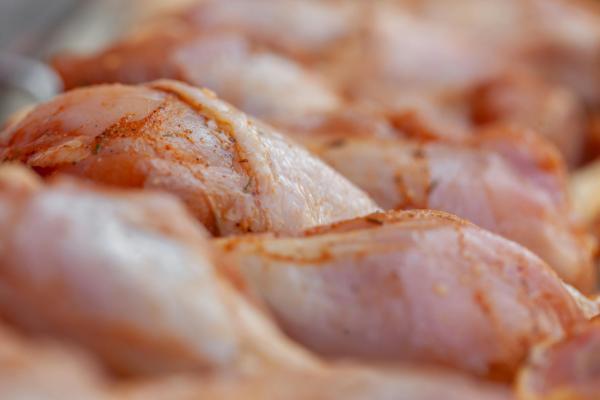
Chicken is one of the most popular foods served in cafés, restaurants, takeaways, and catering businesses – but it is also one of the highest risk if not handled and cooked correctly.
Raw poultry can carry harmful bacteria such as Salmonella and Campylobacter. If chicken is undercooked or cross-contamination occurs, customers can become seriously ill.
This guide explains the legal cooking temperatures, food safety risks, and best practice procedures for cooking chicken safely in food businesses.
What Is the Safe Cooking Temperature for Chicken?
According to guidance from the Food Safety Authority of Ireland (FSAI), poultry must be cooked to:
- A core temperature of at least 75°C
or
- An equivalent time–temperature combination that achieves the same level of pathogen reduction.
The temperature must be measured at the thickest part of the meat, avoiding bone.
Colour is not a reliable indicator of safe cooking.
Why Is Chicken High Risk?
Raw chicken commonly carries:
- Campylobacter
- Salmonella
Unlike whole cuts of beef, poultry must always be thoroughly cooked because bacteria can be present throughout the meat — not just on the surface.
Improper cooking can result in food poisoning outbreaks and enforcement action.
How to Check Chicken Is Cooked Safely
Food businesses must use a sanitised probe thermometer to check core temperature.
Best practice for temperature checks:
- Insert the probe into the thickest part of the chicken.
- Avoid touching bone.
- Ensure the reading reaches 75°C or above.
- Clean and sanitise the probe after use.
- Record the temperature in your HACCP documentation.
Common Mistakes When Cooking Chicken
Environmental Health Officers frequently identify:
- Relying on colour instead of temperature
- Not checking thickest portions
- Using dirty or uncalibrated probes
- Uneven cooking due to overcrowded ovens
- Cooking from frozen without adjusting time
These mistakes increase the risk of undercooking.
Preventing Cross-Contamination
Safe cooking alone is not enough. Cross-contamination from raw chicken is a major risk.
Food businesses must:
- Store raw chicken below ready-to-eat foods
- Use separate chopping boards and utensils
- Wash hands thoroughly after handling raw poultry
- Clean and disinfect food contact surfaces
- Avoid washing raw chicken (this spreads bacteria)
Is Cooking Chicken a HACCP Critical Control Point?
Yes. In most food businesses, cooking chicken is a Critical Control Point (CCP) because it eliminates harmful bacteria.
Your HACCP system should:
- Identify cooking as a CCP
- Set 75°C as the critical limit
- Define how temperatures are monitored
- Record checks consistently
- Outline corrective actions
What If Chicken Does Not Reach 75°C?
If the core temperature does not reach 75°C:
- Continue cooking until it does
- Re-check the temperature
- Record the corrective action
If safe cooking cannot be confirmed, the product must not be served.
Storage and Reheating of Cooked Chicken
Once cooked:
- Hot hold at 63°C or above, or
- Cool rapidly and refrigerate at 5°C or below
If reheating, chicken must again reach a core temperature of at least 75°C.
Reheat once only.
What Will EHOs Look For?
During inspections, Environmental Health Officers typically check:
- Cooking temperature records
- Proper use of probe thermometers
- Evidence of staff training
- Separation of raw and cooked foods
- Cleanliness of equipment
Failure to demonstrate safe cooking procedures can lead to enforcement action.
Frequently Asked Questions
Can chicken be served slightly pink?
No. Chicken must be fully cooked to 75°C. Colour is not a safe indicator.
Do I need to record every chicken temperature check?
Your HACCP system should define how frequently checks are recorded to demonstrate consistent control.
Can I cook chicken from frozen?
Yes, but cooking time must be adjusted and core temperature must still reach 75°C.
Is reheated chicken safe?
Yes, if it has been cooled correctly and reheated to at least 75°C. It should only be reheated once.
How SafeHands Can Help
SafeHands Health & Safety Solutions supports food businesses by:
- Developing HACCP systems
- Reviewing cooking controls
- Training staff in safe poultry handling
- Preparing businesses for EHO inspections
Clear, documented procedures protect both your customers and your business. Contact us to learn more.