
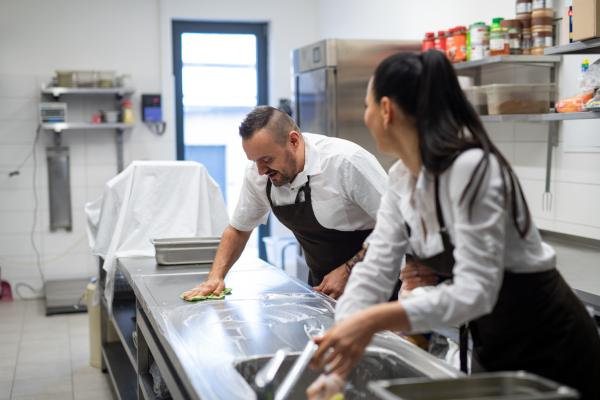
A HACCP plan that nobody understands is paperwork, not food safety. If the person prepping cold starters on a Monday morning can't tell you what a critical control point is or why it matters, the plan exists to satisfy an inspection, not to prevent harm. On-site HACCP Level 2 training and certification from SafeHands Health & Safety Solutions is designed to close that gap, at your premises, with your team, in terms of your actual operation.
Table of Contents
- Introduction to HACCP Training
- Benefits of On-Site HACCP Training
- Overview of On-Site HACCP Training Programmes
- Compliance and Regulatory Requirements
- Choosing the Right Training Provider
- Case Studies and Success Stories
- Frequently Asked Questions
1. Introduction to HACCP Training
Before getting into what the training covers, it helps to be clear on what HACCP actually is, and why food businesses in Ireland don't get to decide whether to implement it.
i. What is HACCP?
HACCP stands for Hazard Analysis Critical Control Point. It is a systematic, science-based approach to identifying where food safety hazards can enter the food chain, biological, chemical, and physical, and establishing controls to prevent them from reaching customers. It's not a box-ticking exercise. It's a way of thinking about food safety that runs through every decision a food business makes, from goods-in through to service.
The seven HACCP principles form the backbone of the system: hazard analysis, identification of critical control points, establishing critical limits, monitoring procedures, corrective actions, verification, and record-keeping. A team that understands all seven, not just the names but what each one means in practice, is a team that can apply the system properly.
ii. Importance of HACCP in Ireland
Under current legislation, all food businesses in Ireland are required to have food safety management procedures based on HACCP principles. This obligation applies across the board: cafés, hotel kitchens, catering companies, food manufacturers, retailers. Environmental Health Officers assess HACCP compliance as a core part of their standard inspections, and they can distinguish a business where staff genuinely understand the system from one where HACCP exists on paper only.
2. Benefits of On-Site HACCP Training
Send your team to a training centre and they spend the day translating generic examples back to their own kitchen. Bring the trainer to you and that translation disappears entirely.
i. Tailored Learning Experience
Generic training delivered in an external facility asks participants to translate everything they hear back to their own workplace. On-site training removes that step entirely. When the trainer is standing in your kitchen or production area, they can reference your specific equipment, your layout, your critical control points. Scenarios are grounded in what your team actually encounters. That contextual relevance is what makes the learning stick rather than fade once the session ends.
It also means the questions that come up are real questions, about your chillers, your delivery bay, your cleaning schedules, rather than abstract ones. Those conversations tend to be the most useful part of any training session.
ii. Immediate Implementation of Knowledge
Because everything covered in the session connects directly to the workplace where participants will apply it, the transition from training to practice is immediate. There's no period of adjustment or translation. Staff return to their roles already thinking about their HACCP plan in the terms they've just been trained in. Supervisors who attend come back able to reinforce the same language and framework with their teams from day one.
3. Overview of On-Site HACCP Training Programmes
Five hours. Up to 12 people. Your premises. Here's what those five hours actually cover.
i. Structure of Training Sessions
The SafeHands HACCP Level 2 course covers all seven HACCP principles in detail, along with personal hygiene, cross-contamination, safe storage temperatures, labelling, and stock rotation. Participants work through building a HACCP plan for their own workplace, not as a theoretical exercise but as practical preparation they can take directly back into use. Sessions accommodate up to twelve participants, keeping the group small enough for meaningful interaction and individual attention.
ii. Duration and Frequency of Training
Each session runs for approximately five hours. Certification is valid for three years, after which refresher training is recommended. Refreshers are useful not only to renew the certificate but to account for any changes in food safety guidance, updates to the operation, or new staff who have joined since the original training. Training is scheduled based on trainer availability. SafeHands does not have its own training facilities, all sessions are delivered at the client's premises.
3. Compliance and Regulatory Requirements
Irish food law doesn't ask whether your business has had a good run without incidents. It asks whether your procedures are in place, documented, and understood. Those are three separate questions.
i. HACCP Standards in Ireland
HACCP-based food safety management is a legal requirement for all food businesses in Ireland under current legislation. Certification recognised by Environmental Health Officers and inspectors across Ireland is issued to every participant on completion of the SafeHands course, valid for three years. Trainer credentials are available on request.
ii. The Role of On-Site Training in Meeting Regulations
EHOs don't just check whether a HACCP plan exists, they assess whether staff understand it and whether procedures reflect what actually happens in the kitchen. On-site training, because it's grounded in your specific operation, is directly relevant to the compliance picture an EHO will examine. Documented training records showing who has been certified and when are part of demonstrating ongoing compliance, not just a one-off exercise.
4. Choosing the Right Training Provider
There's a version of HACCP training that ticks a box and a version that actually changes how your team works. The difference comes down to a few practical questions worth asking before you book anything.
i. Factors to Consider
When evaluating HACCP training providers, the questions that matter most are practical: is the training delivered at your premises, or do staff have to travel? How many participants can attend each session? Is the certification recognised by EHOs? Is refresher training available? How are training records provided and documented? SafeHands addresses all of these directly, on-site delivery, up to twelve participants, EHO-recognised certification, three-year validity, and individual certificates for every attendee.
ii. Reputable Training Providers in Ireland
SafeHands is a Dublin-based health and safety training provider delivering HACCP Level 2 training on-site at food businesses across Ireland. Contact SafeHands at 01 7979836, 087 3823223, or info@safehands.ie. Payment via Stripe, bank transfer, or phone.
5. Success Stories
The clearest evidence that on-site HACCP training works comes from the food businesses that have been through it, some of them more than once.
i. Impact of Effective HACCP Training
SafeHands has delivered HACCP Level 2 training for a wide range of food businesses across Ireland, from city-centre bars and restaurants to hotel kitchens and food production facilities. Clients include Meaghers Bar on O'Connell Bridge, Shouk Restaurant in Drumcondra, Rasam Restaurant in Glenageary, the Skylon Hotel, Cabra Castle Hotel, Sligo Southern Hotel, and Sandymount Hotel, among many others.
The diversity of that client list reflects the range of operations the training is suited to. Whether the kitchen runs a daily restaurant service or a large hotel catering operation, the on-site format means training is always grounded in the specific environment where food is being prepared.
ii. Testimonials from Participants
The feedback from food business clients points consistently to the same things: practical relevance, quality of instruction, and confidence in compliance.
The team at Exchange House Ireland noted that staff found the course thorough and that they were happy to receive HACCP Level 2 certification in a single on-site day, adding: "We have no hesitation in recommending SafeHands to provide their certification training course in food safety."
The River Bar in Dublin noted that staff described the instructor as "a very highly qualified instructor who answered all our questions" and praised the way participants were actively encouraged to engage with the material.
The Sligo Southern Hotel highlighted the particular value of having an instructor who is also a qualified chef: "He was so helpful in giving us tips and tricks to implement in our kitchen to ensure the highest standard of food safety."
To arrange on-site HACCP Level 2 training for your team, contact SafeHands at info@safehands.ie, by calling 01 7979836 or 087 3823223, or through the enquiry form at safehands.ie.
6. Frequently Asked Questions
What does the course include?
All seven HACCP principles, hazard identification, food safety legislation, personal hygiene, safe storage and handling, and building a HACCP plan for your own workplace.
How long is the certificate valid?
Three years. Recognised by Environmental Health Officers and inspectors across Ireland.
How do I arrange training?
Call 01 7979836 or 087 3823223, email info@safehands.ie, or use the enquiry form at safehands.ie.
What are the payment options?
Stripe, bank transfer (invoice emailed), or by phone.