
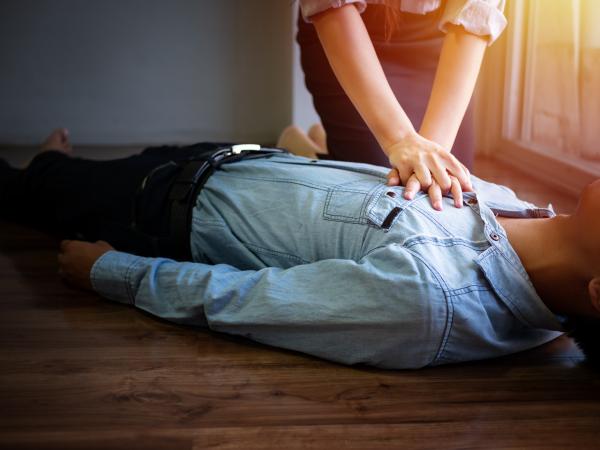
Somebody in your workplace will have a medical emergency one day. That's not alarmism, it's statistics. The question is whether the person closest to them will know what to do, or whether they'll stand there waiting for somebody else to act. Irish emergency first aid certification from SafeHands Health & Safety Solutions is about making sure the answer isn't the second one.
Table of Contents
- Introduction to Irish Emergency First Aid Certification
- Achieving Emergency First Aid Certification
- Certification Validity and Recognition
- Skills Covered by Certification
- Maintaining Your Certification
- Career and Workplace Benefits
- Frequently Asked Questions
1. Introduction to Irish Emergency First Aid Certification
Let's be clear about what certification actually means here, and why the gap between a certificate that reflects real training and one that doesn't is larger than most people appreciate.
i. Recognised Standards in Ireland
The SafeHands Emergency First Aid certificate is a nationally recognised qualification for workplace first aid provision in Ireland. Certification is valid for two years and is appropriate for use across all workplace sectors. Sessions are capped at ten participants, a deliberate limit that ensures everyone gets adequate hands-on practice time, not just observation. Trainer credentials are available on request.
ii. Importance of Proper Certification
A certificate matters only if the training behind it was substantive. Emergency first aid can't be learned by watching a demonstration. The skills involved, CPR compressions, AED operation, choking response, bleeding control, are physical techniques that need to be practised repeatedly to be useful under pressure. The SafeHands course is built around this. Participants don't leave having watched someone else work through the procedures. They leave having done them themselves.
2. Achieving Emergency First Aid Certification
Attending isn't enough. Neither is watching. The SafeHands course is built on the principle that you learn first aid by doing it repeatedly, not by observing it once.
i. Training and Assessment Requirements
The course runs for approximately five hours and is delivered on-site at the client's premises across Ireland. All training content is assessed, and participants must demonstrate competence in the practical skills covered, not just attend.
ii. Practical and Theoretical Components
The course opens with the primary survey, the rapid assessment framework that tells a first aider what they're dealing with and in what order to respond. This foundation matters because it stops people freezing in the moment. CPR follows: compression rate, depth, recoil, rescue breaths, and transitions between single and multi-rescuer scenarios. AED use is covered in full, including pad placement, rhythm analysis, and resumption of CPR. Choking response addresses mild and severe obstruction across age groups. Bleeding management covers direct pressure, wound packing, and recognition of and response to shock. Recovery position rounds out the practical content.
The ten-participant cap is not incidental to quality, it's the reason for it. In a group of ten, the instructor can watch every participant's compressions and correct technique in real time. That level of individual attention is not achievable in larger groups.
3. Certification Validity and Recognition
Two years. That's how long the SafeHands Emergency First Aid certificate lasts, and what it means in practice for employers who need to demonstrate first aid provision in the workplace.
i. Certificate Duration
The SafeHands Emergency First Aid certificate is valid for two years from the date of completion. Each participant receives an individual certificate on successful completion of the course. Refresher training is available before expiry.
ii. Employer Recognition
Under current Irish legislation, employers are required to provide appropriate first-aid provision for their workforce. For most workplaces, having at least one currently certified first aider on site at all times meets this baseline requirement. The SafeHands Emergency First Aid certificate is appropriate for this purpose. Higher-risk environments, construction, manufacturing, and healthcare typically require more than one certified first aider, proportionate to the number of employees and the nature of the hazards involved.
4. Skills Covered by Certification
CPR. AED. Choking. Severe bleeding. Unconscious casualty. These aren't abstract competencies; they are the specific things that determine whether someone survives the minutes before an ambulance arrives.
i. Life-Saving Techniques
The core of the course is CPR (cardiopulmonary resuscitation) for adults, children, and infants, and AED operation. These two skills address the most time-critical emergency a workplace first aider is likely to face. When someone goes into cardiac arrest, outcomes deteriorate rapidly without intervention. A trained person who acts immediately changes that outcome. The course ensures participants have practised both skills enough times to apply them under pressure, not just recall them.
ii. Emergency Response Competencies
Beyond CPR and AED, the certification covers choking management across age groups, severe bleeding control, including wound packing, shock recognition and management, and care of an unconscious but breathing casualty, including the recovery position. Participants also develop their ability to conduct a primary survey, the structured initial assessment that determines the priority response, and to manage the scene effectively while waiting for emergency services.
5. Maintaining Your Certification
Skills fade. Guidelines change. A certificate from three years ago doesn't tell you whether someone can still perform effective CPR today, which is exactly why the two-year renewal exists.
i. Refresher Course Requirements
Emergency first aid certification is valid for two years. Refresher training before expiry is strongly recommended, not only to maintain the certificate but also because first aid techniques evolve. CPR guidance has been updated several times over the years and will be again. Skills that are never used in a real emergency also erode over time. A refresher ensures that, if the certificate is ever needed in practice, the training behind it remains current and reliable.
ii. Continuing Professional Development
For many roles in Ireland, designated workplace first aiders, safety officers, and managers with direct responsibility for staff welfare must maintain a current emergency first aid certificate. Staggering renewal dates across a team ensures continuous first-aid coverage without gaps, particularly important for organisations that operate across multiple shifts or locations.
6. Career and Workplace Benefits
Holding a current emergency first aid certificate is a credible professional asset across many sectors in Ireland. For roles with specific safety responsibilities, it is often a requirement rather than an optional extra. More broadly, having trained first aiders embedded across a team contributes to a genuine safety culture, one where the capacity to respond to a medical emergency is built into the organisation rather than dependent on whoever happens to be nearby when something happens.
SafeHands delivers on-site Emergency/Basic First Aid training and certification across Ireland for up to 10 participants, with a 2-year cert, fully on-site. Contact us at 01-7979836, 087 3823223, or info@safehands.ie. Enquire via the form at safehands.ie. Payment via Stripe, bank transfer, or phone.
7. Frequently Asked Questions
What is Irish emergency first aid certification?
A two-year certificate confirming completed and assessed training in emergency first aid, CPR, AED use, choking management, bleeding control, and unconscious casualty care.
How long is it valid?
Two years. Refresher training available before expiry.
How do I arrange it?
Phone 01-7979836 or 087 3823223, email info@safehands.ie, or use the enquiry form at safehands.ie.
What are the payment options?
Stripe, bank transfer (invoice emailed), or by phone. Full payment upfront, no staged payments, deposits, or payment plans.
Is training at our workplace?
Yes. All SafeHands training is delivered on-site at the client's premises. SafeHands does not have its own training facilities.