
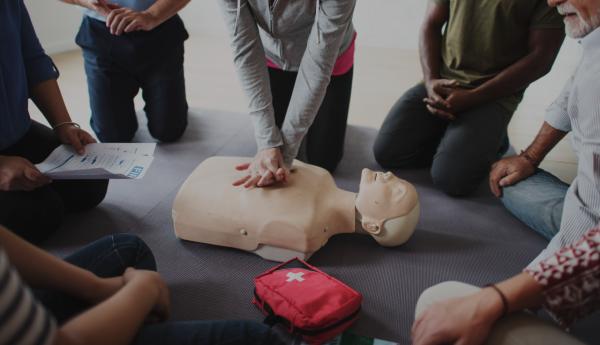
The average ambulance response time in Ireland varies by location – and in the minutes between a medical emergency and the arrival of paramedics, the actions of whoever is first on the scene determine a great deal. A Certified First Aid Responder is trained specifically for that window: to assess, to act, and to keep a casualty stable until professional help arrives. SafeHands Health & Safety Solutions delivers First Aid Responder training and certification at your workplace throughout Ireland, across two to three days of practical, scenario-based training.
Table of Contents
- Introduction to Certified First Aid Responder Status
- Certification Requirements
- Skills and Competencies
- Professional Responsibilities
- Professional Development Benefits
- Frequently Asked Questions
1. Introduction to Certified First Aid Responder Status
Workplace emergencies do not announce themselves. A heart attack during a morning briefing, a severe allergic reaction at lunch, a colleague who collapses on a construction site – in each scenario, what happens in the minutes before an ambulance arrives determines the outcome. First Aid Responder certification is the qualification that prepares a person specifically for those minutes.
i. National Recognition and Standards
A Certified First Aid Responder is someone who has completed comprehensive, assessed training in workplace first aid, qualifying them to manage a wide range of medical emergencies until professional emergency services arrive. First Aid Responder certification goes substantially further than basic first aid – it covers a broader range of emergency scenarios, requires deeper practical competence, and demands a higher standard of assessment before certification is awarded. SafeHands delivers First Aid Responder training throughout Ireland, at the client's venue, with instruction tailored to the specific environments and risks of each workplace.
ii. Importance of Certification
Workplace emergencies require immediate, skilled response. The outcome of many medical emergencies is significantly influenced by what happens in the first few minutes – before an ambulance can reach the scene. For employers, Certified First Aid Responders are also part of the first aid provision that current legislation in Ireland requires businesses to have in place. The specific requirements depend on workforce size, the nature of work activities, and the hazards present, but having trained, certified individuals on staff is a core component of meeting those obligations and demonstrating genuine duty of care.
2. Certification Requirements
Achieving Certified First Aid Responder status requires more than attendance. The qualification demands demonstrable competence across a wide range of emergency scenarios. A participant will be able to show that they can manage a cardiac arrest, control severe bleeding, or respond to anaphylaxis.
i. Training Course Completion
First Aid Responder certification requires completion of a structured programme that combines theoretical instruction with extensive hands-on practice. SafeHands delivers training over two to three days, providing sufficient time for comprehensive coverage of emergency scenarios and the development of genuine practical skill. The course is delivered onsite at your premises or at a venue you provide. This means instruction always takes place in an environment directly relevant to where participants will use their skills.
ii. Assessment and Evaluation Standards
Certification is not awarded simply for attendance. Participants must demonstrate both theoretical understanding and practical competence through assessment processes that verify readiness to perform in real emergencies. This includes written evaluation of knowledge and scenario-based practical assessments in which participants must assess, prioritise, and manage realistic emergency situations from start to finish.
3. Skills and Competencies
The First Aid Responder course covers considerably more ground than basic first aid. The range of emergencies addressed – from cardiac arrest to burns, fractures, and anaphylaxis – reflects the range of situations a Responder is genuinely likely to encounter across a working lifetime. Competency is developed through repeated hands-on practice, not observation.
i. Advanced First Aid Techniques
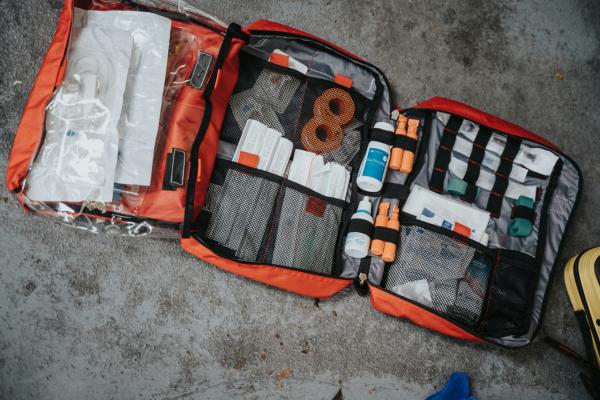
The course covers scene assessment and safety management, cardiopulmonary resuscitation (CPR) and automated external defibrillator (AED) use, management of breathing emergencies including choking and asthma attacks, severe bleeding control and shock recognition and management, wound care and dressing, burn management across different types and severities, fracture and sprain management, head, neck, and spinal injury protocols, and eye injury management. Each area is addressed through a combination of instruction, demonstration, and hands-on practice to develop both technical skill and confidence.
ii. Emergency Leadership Abilities
First Aid Responders frequently operate in situations where others are looking to them for direction. The course develops the ability to remain calm under pressure, to communicate clearly with a distressed casualty and with bystanders, and to coordinate effectively with other responders where multiple trained individuals are present. Scenario-based learning throughout the course builds the decision-making capability and situational awareness that textbook study alone cannot produce. Participants leave training with both the technical skills and the composed, leadership-ready mindset that the First Aid Responder role demands in practice.
4. Professional Responsibilities
Certified First Aid Responders take on formal responsibilities within their organisation that extend beyond responding to emergencies. Understanding the full scope of the role – and the ongoing commitment it involves – is an important part of what the course prepares participants for.
i. Workplace First Aid Duties
A Certified First Aid Responder in Ireland has defined professional responsibilities that extend beyond responding to emergencies. These include maintaining familiarity with the first aid equipment available in their workplace, knowing the location of first aid kits and AEDs, understanding the first aid procedures specific to their workplace hazards, and maintaining accurate records of any first aid incidents they attend. These records serve multiple purposes – from regulatory compliance and risk assessment reviews to insurance documentation in the event of a claim.
ii. Ongoing Learning Requirements
First aid knowledge and guidelines evolve over time, and techniques that were standard practice previously may have been updated or superseded. Refresher training supports ongoing competence by updating First Aid Responders on current evidence-based practice, refreshing skills that may not have been used since initial certification, and reinforcing the confidence that comes from regular structured practice. SafeHands offers refresher training for certified First Aid Responders approaching renewal to ensure continued readiness.
5. Career Enhancement
Certified First Aid Responder status is a qualification that transfers. It is recognised across sectors in Ireland, actively sought by employers in healthcare, construction, manufacturing, hospitality, childcare, and event management, and it retains its value through career transitions. For individuals, it is both a credential and a capability – something that shows on a CV and that means something in a real emergency.
i. Professional Development Benefits
Certified First Aid Responder status is a tangible professional qualification that enhances an individual's profile in a wide range of employment contexts. Employers across healthcare, construction, manufacturing, hospitality, education, and the broader service sector recognise the value of having certified first aiders on their teams, and the qualification is frequently listed as a preference or requirement in job postings. For individuals, certification demonstrates commitment to professional development and a genuine capacity to contribute to the safety of colleagues and the public.
ii. Employment Opportunities
In some sectors and roles, Certified First Aid Responder status is effectively a baseline requirement. Healthcare support roles, construction site supervisory positions, childcare settings, and event management are among the contexts where certification is most commonly specified. Holding a current, recognised First Aid Responder certification makes candidates more competitive and more versatile in the Ireland job market. It is also a qualification that transfers across employers and sectors, retaining its value as careers develop and circumstances change over time.
6. Maintaining Certified Status
Certification validity varies, and SafeHands will advise on the specific renewal requirements applicable to your course at the time of booking. As certification periods approach expiry, refresher training provides a more efficient route to recertification than repeating the full initial programme, while ensuring that skills and knowledge remain current. Keeping First Aid Responder certifications up to date across a workforce requires forward planning, and SafeHands can assist with scheduling as renewal dates approach.
To arrange First Aid Responder training in Ireland, contact SafeHands via the enquiry form at safehands.ie, call 01 7979836 or 087 3723223, or email info@safehands.ie. Scheduling depends on trainer availability. Payment is accepted via Stripe, bank transfer (invoice with bank details by email), or by phone. Full payment is required upfront; no staged payments or payment plans are available.
7. Frequently Asked Questions
Below are the most common questions raised by employers and individuals enquiring about Certified First Aid Responder training in Ireland.
What is a Certified First Aid Responder in Ireland?
Someone who has completed comprehensive, assessed workplace first aid training and can manage a wide range of medical emergencies until professional emergency services arrive.
How long does certification remain valid?
Certification validity varies. SafeHands will confirm the specific renewal requirements applicable to your course at the time of booking.
How can I enquire about certification training?
Via the enquiry form at safehands.ie, by calling 01 7979836 or 087 3823223, or by emailing info@safehands.ie.
What payment options are available?
Stripe, bank transfer, or by phone. Full payment is required upfront; no deposits or payment plans are offered.
Can training be delivered at our workplace?
Yes. All training is delivered onsite at your venue or on-site at your office. SafeHands does not operate its own training facilities.